
Water Features in Reno, NV: A Low-Water Design Guide
Moving water can transform a quiet corner of a yard, but a high-desert feature should be designed around water control from the beginning. The right sound, basin, pump, and placement matter as much as the stone that people see. For homeowners comparing water features in Reno, NV, a low-water plan can deliver a strong focal point without pretending the property has an unlimited supply.
Rock Solid Landscape designs and builds custom water features in Reno, including water walls, natural rock waterfalls, and bubbling features. This guide explains how to choose a scale and system that fit the space, limit avoidable water loss, and stay practical through seasonal changes.
Start With the Experience, Not the Feature Type
Before deciding between a waterfall and a bubbler, identify what the water should do for the space. Some homeowners want sound near a seating area. Others need a visual destination at the end of a path or a vertical element against a blank wall.
Stand in the places where the feature will be experienced:
- the main indoor view through a window or door
- a patio chair at conversation height
- the path used to enter the backyard
- a nearby property line or street-facing edge
Sound changes with distance, wind, walls, and flow. A modest cascade close to the patio may feel more satisfying than a larger feature tucked far away. Placement should also avoid sending splash onto doors, walking surfaces, or materials that show mineral deposits easily.
Choose a Closed-Loop System
Most practical residential water features recirculate water from a basin back to the top. That closed loop avoids a continuous fresh-water flow, but the system still loses water through evaporation, splash, wind, and maintenance. Design choices can reduce those losses.
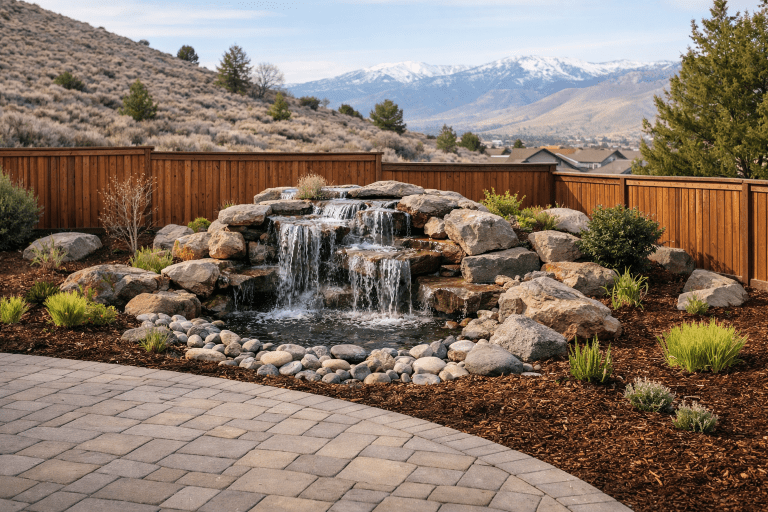
A pondless waterfall stores water in a concealed reservoir below rock or gravel. It provides movement and sound without a large open pond. A bubbler can create a quieter effect with a smaller visible flow. A water wall offers a contemporary vertical surface, but splash control and wind exposure require attention.
There is no universally lowest-maintenance option. A small feature placed under heavy leaf drop may need more cleaning than a larger one in an open setting. Discuss the specific pump access, basin volume, filtration, and refill routine rather than relying on a category label alone.
Control Splash Before It Becomes Water Loss
Splash is affected by drop height, flow rate, landing surface, basin width, and wind. More dramatic water is not always better. If droplets regularly land outside the capture area, the feature will need more frequent topping off and may leave nearby pavers damp.
During design, look at each transition where water leaves a lip or rock. The landing zone should return water to the basin, even when the flow changes slightly. Boulders and planting can frame the feature without forcing water onto soil.
Rock Solid Landscape’s full landscape design and build services can coordinate the feature with patios, grades, and plantings. That wider view is useful because a water feature performs better when the surrounding space supports it.
Size the Basin for Reliable Operation
The visible waterfall is only half of the system. The basin needs to hold enough water for circulation while maintaining a safe operating level as evaporation occurs. A basin that is too small may require constant attention. An oversized pump can create more splash and energy use than the desired effect requires.
Ask how the design accounts for water in motion, access for topping off, pump removal, and seasonal shutdown. Components should be reachable without dismantling the entire finished feature. Automatic fill options may add convenience, but they should not hide a leak. A homeowner still needs a way to notice unusual water use.
Use Placement to Reduce Heat and Wind Exposure
Reno’s sun and dry air make exposure an important design variable. A feature in full afternoon sun may lose water faster and invite more algae than one in a thoughtfully selected location. Constant wind across a tall sheet of water can carry droplets beyond the basin.
That does not mean every feature belongs in deep shade. Instead, compare views, tree debris, afternoon heat, prevailing wind, and access. The best location balances the homeowner experience with system performance.
Nearby outdoor lighting can extend the visual effect after sunset. Fixtures should reveal moving water without shining into viewers’ eyes or encouraging someone to step near an edge they cannot see.
Pair Water With a Drought-Conscious Planting Palette
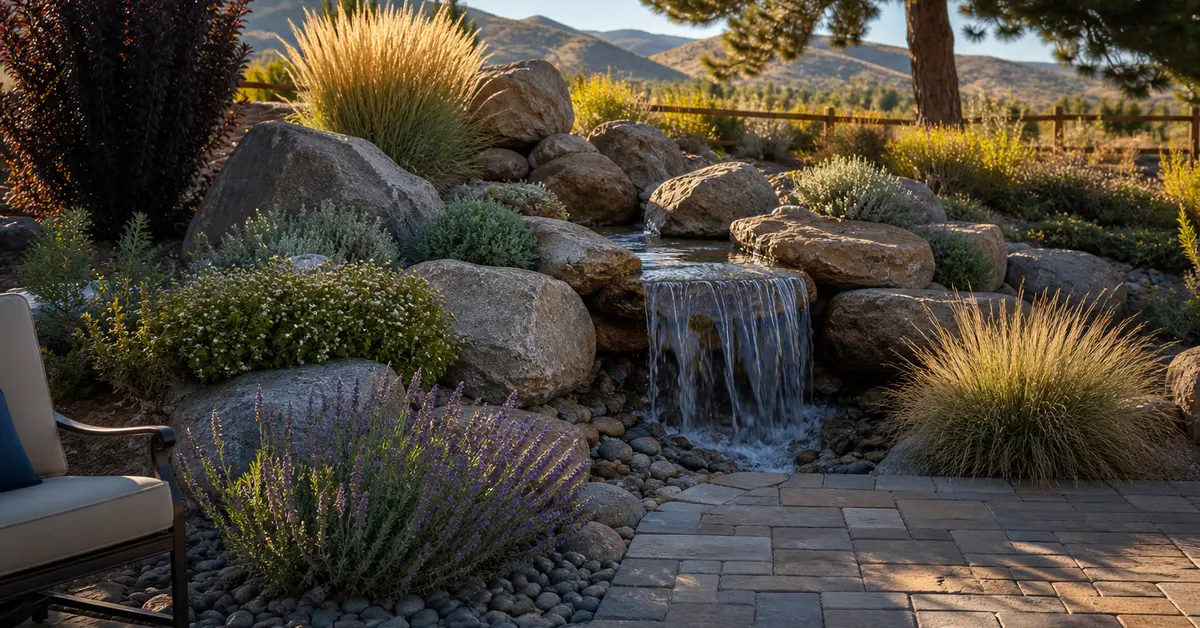
A water feature does not require a ring of thirsty lawn or tropical plants. In a Reno landscape, regional stone, ornamental grasses, drought-adapted shrubs, and gravel can create contrast around moving water. Repeating materials from existing walls or pavers helps the new focal point belong with the rest of the yard.
Keep irrigation zones separate from the feature. Overspray adds no useful water to the basin and can mark stone or equipment. If new planting is part of the project, coordinate it with efficient irrigation installation rather than treating every plant around the water as one high-use zone.
Plan for Fall Maintenance and Winter Conditions
September is a good time to evaluate how a feature will be used as nights cool. Deciduous leaf drop can load the pump screen and basin with debris. Freezing conditions can damage components if the system is not operated or winterized according to its design.
A practical maintenance plan should answer:
- How often should debris be removed from the intake or screen?
- Where can the pump be accessed safely?
- How will the water level be checked?
- Which surfaces need occasional cleaning?
- What exact shutdown or winter operation steps apply to this system?
Follow the equipment manufacturer’s directions and the installer’s site-specific guidance. Do not assume advice for an ornamental tabletop fountain applies to a built-in waterfall.
Visualize the Feature Before Construction
Water features are three-dimensional and highly dependent on sightlines. A design rendering can help compare height, stone massing, surrounding plants, and the view from the patio before work begins. It also makes the desired water effect easier to discuss than a list of materials alone.
Rock Solid Landscape offers landscape designs and renderings for coordinating these choices. For seasonal timing considerations, this earlier guide explains when to install a water feature in Northern Nevada.
Frequently Asked Questions
Can a Reno water feature recirculate the same water?
Yes. Many residential features use a closed-loop pump and basin. They still need occasional top-offs because evaporation, splash, wind, and maintenance remove some water.
What is a pondless waterfall?
It is a waterfall whose visible flow disappears into a concealed reservoir rather than a large open pond. Water is pumped back to the top. Basin sizing, pump access, and splash control remain important.
Do water features need winterization in Reno?
Many systems need a cold-weather plan, but the correct steps depend on the pump, plumbing, depth, placement, and intended operation. Follow the installed system’s specific guidance before freezing weather.
How can a water feature lose less water?
Use a closed-loop design with controlled flow, an adequately sized basin, limited splash, and placement that considers wind and sun. Check for unusual level changes that could indicate a leak.
Create Movement Without Wasting the Moment
A low-water water feature succeeds when the visible result and hidden system support each other. Sensible scale, recirculation, splash control, access, and high-desert planting can create a focal point that feels refreshing rather than demanding.
To explore a custom feature for your Reno property, contact Rock Solid Landscape or call (775) 618-0621. A site-specific design conversation can match the sound, scale, and maintenance level to the way you want to use your yard.