
Artificial Grass Installation in Reno: What to Expect From Start to Finish
If you’ve ever dug a shovel into a Reno, NV backyard, you already know what’s waiting a few inches down: a dense, caliche-heavy hardpan that drains poorly, compacts quickly, and makes growing anything consistently green a real fight. That layer of calcium carbonate-cemented soil is one of the main reasons natural grass in the Truckee Meadows area tends to look stressed by late June, no matter how diligent you are with watering. It’s also one of the most important reasons artificial grass installations in Reno require a different approach than what you’d see in wetter climates. The base preparation here isn’t optional or minimal. It’s the foundation that determines whether your turf performs well for five years or fifteen.
What Artificial Grass Installation Actually Involves
There’s a common assumption that installing artificial turf is mostly about rolling out a product and securing the edges. In practice, the surface material is almost the last thing we touch. The majority of the work, and the majority of what determines long-term performance, happens below grade.
Our process starts with excavation. Depending on the existing yard, we typically remove four to six inches of native soil to create room for a proper base system. In Reno, that native soil often includes the caliche layer we mentioned, which has to be broken up and removed rather than compacted in place. Once excavation is complete, we install a weed barrier fabric before bringing in a decomposed granite base, typically compacted in lifts to create a stable, level surface. That base layer handles drainage, and drainage matters more here than most people realize. Even in a dry climate, Reno gets concentrated rainfall events, and water needs somewhere to go quickly. Artificial turf that sits on a poorly drained base will develop odor problems and soft spots over time.
After the base is compacted and graded, we lay the turf itself. Product selection is part of our conversation with every homeowner before we ever break ground. Pile height, blade shape, color variation, and infill type all affect how the finished surface looks and feels. For pet owners, we typically recommend a shorter pile with a zeolite or coated silica infill that controls odor. For yards that are primarily decorative or used for entertaining, a longer, more natural-looking blade tends to work better. We also account for sun orientation. South and west-facing yards in Reno absorb significant heat in summer, and some turf products handle that better than others.
Why Local Conditions Shape Every Artificial Grass Reno Project
Reno sits at roughly 4,500 feet elevation, and that altitude affects everything from UV intensity to temperature swings. The sun here is harder on materials than most homeowners expect, which is why we only work with turf products that carry UV-stabilized fibers. A product that holds color well in Portland or Phoenix may not perform the same way under the intensity of a Northern Nevada summer.
Slope is another local factor. Many properties in neighborhoods like Caughlin Ranch, Damonte Ranch, and the foothills west of downtown have significant grade changes in their yards. Artificial turf on a slope requires careful seaming, precise anchoring, and sometimes integration with a retaining wall system to prevent edge lifting or base erosion over time. We’ve seen DIY and low-bid installations on sloped lots fail within a season because the base prep wasn’t appropriate for the grade. On projects with meaningful elevation change, we treat the grading and drainage plan as seriously as the turf selection itself.
Water conservation is also a real part of the conversation for most Reno homeowners. The EPA’s WaterSense outdoor guidance is a useful baseline if you are comparing long-term irrigation demand across different yard surfaces. The Truckee Meadows Water Authority has had tiered pricing structures and periodic restrictions in place for years, and natural lawns in this climate consume a substantial amount of water annually. Replacing that lawn with artificial turf eliminates that draw entirely, which is one reason we’ve seen demand for artificial grass Reno installations grow consistently over the past several years. If you’re also considering removing an existing irrigation system or reconfiguring it for remaining planted beds, our irrigation work can be scoped alongside the turf project so both systems make sense together.
What to Expect During the Installation Process
A typical residential artificial grass Reno installation runs two to four days depending on square footage and site complexity. Day one is usually excavation and base material delivery. Day two is base compaction and grading. The turf goes down on day two or three, with seaming, trimming, and infill application completing the project. We do a final broom and inspection pass before we consider the job finished.
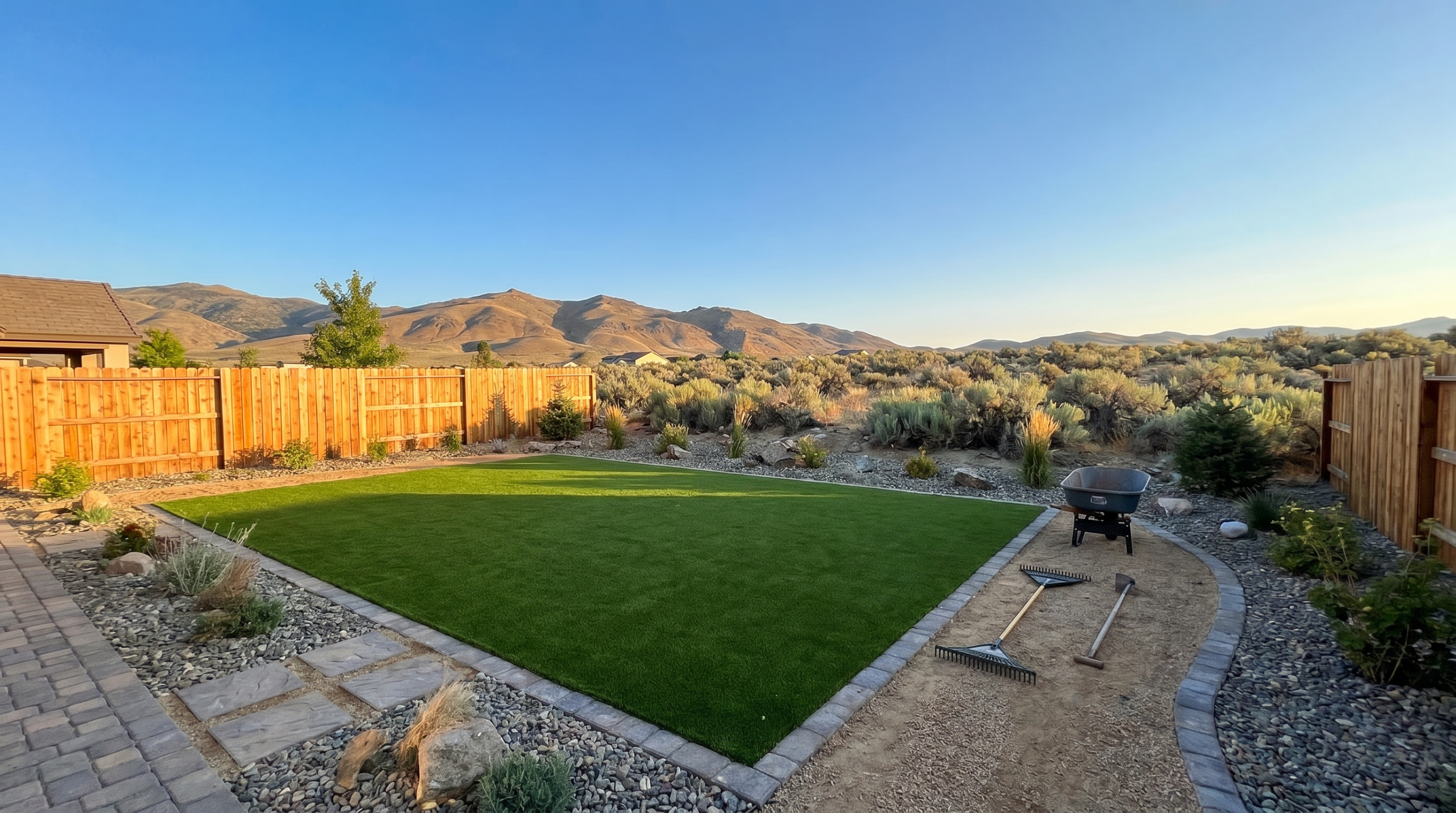
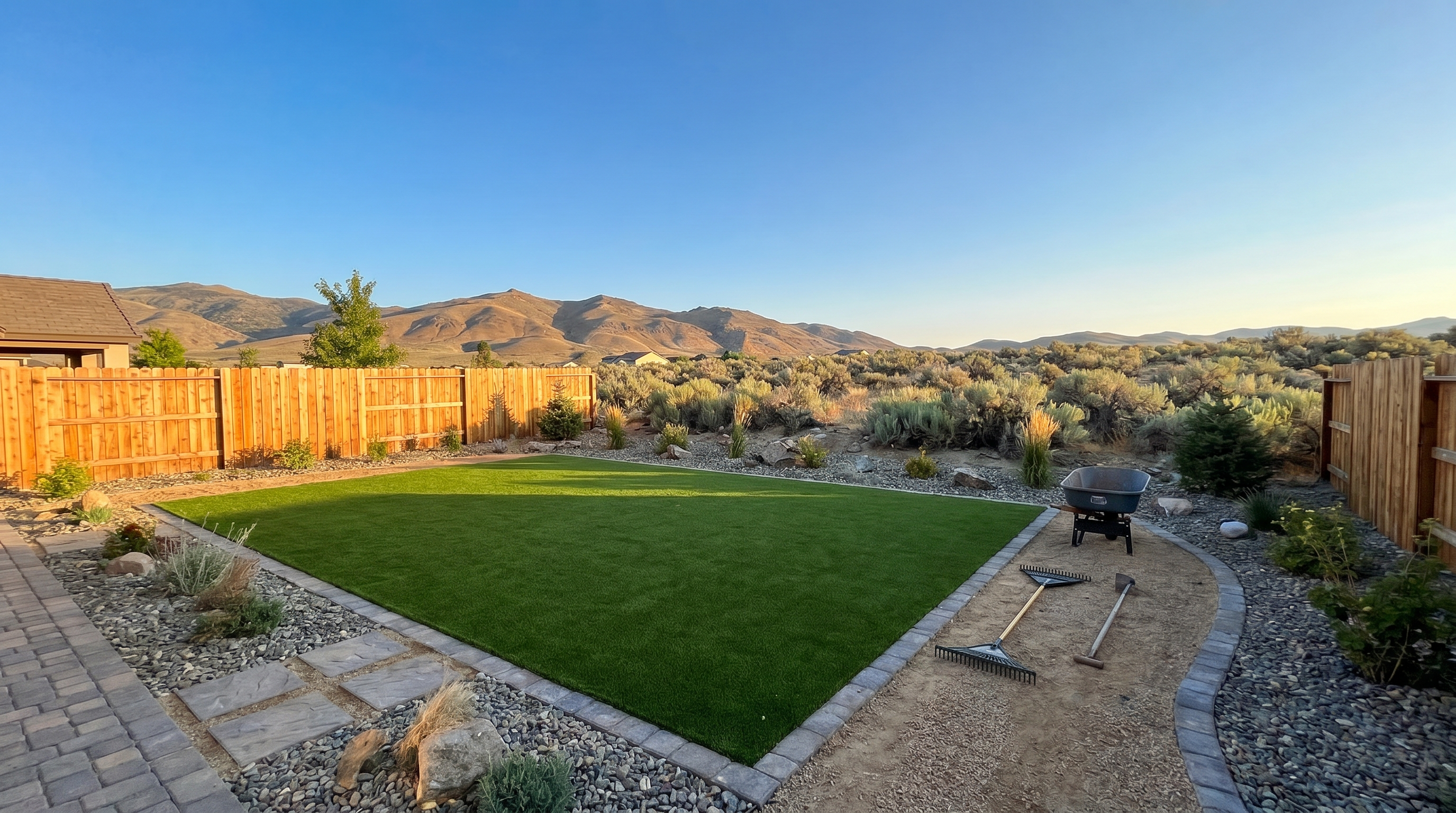
Before any of that begins, we walk the property with the homeowner to confirm measurements, discuss any drainage concerns, and identify whether the project connects to other elements of the yard. Artificial turf integrates well with paver patios and walkways, and many of the projects we complete in Reno combine both surfaces. If you’re also thinking about outdoor lighting or a fire pit, planning those elements together before installation begins saves significant rework later. Our design and rendering process lets homeowners see how those pieces fit together before any ground is broken, which reduces surprises considerably. You can read more about what that process looks like in our guide on landscape rendering in Reno.
Signs Your Yard Is a Good Candidate for Artificial Turf
The clearest signal is a lawn that requires consistent effort but never quite looks the way you want it to. If you’re dealing with bare patches that won’t fill in, a yard that turns brown by July regardless of watering, or a high-traffic area that compacts and wears faster than you can repair it, those are practical problems that artificial turf solves directly. Pet runs, side yards with poor sun exposure, and slopes where mowing is difficult are also situations where we see homeowners get a lot of value from the conversion.
If you’re working with a property that has multiple landscape challenges, our piece on keeping a green lawn with artificial turf installation in Reno is a useful starting point before you make any decisions. We also serve Sparks and Carson City with the same installation standards.
April is one of the better months to schedule artificial grass work in Reno. It lines up with the kind of seasonal transition covered in Ready.gov’s winter weather planning advice, when the ground is workable but summer heat has not taken over yet. The ground is workable after winter, temperatures are moderate for the crew and for material handling, and finishing before summer means you’re not watching another lawn struggle through its first heat cycle. Base material compacts better in spring conditions than in the frozen ground of December or the baked hardpan of August. If you’re ready to move forward or want to talk through what your specific yard requires, reach out to our team and we’ll start with a site visit.