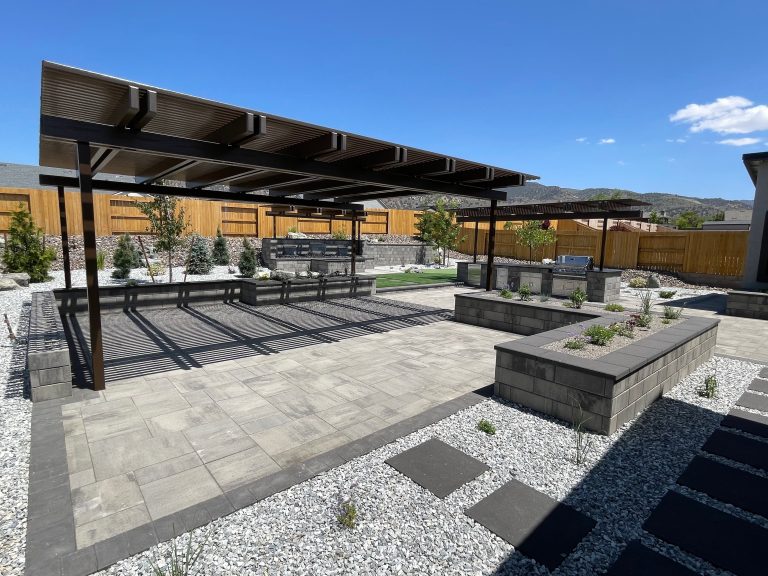

Outdoor Kitchen Installation Carson City NV Guide
It usually starts with the artificial turf. A homeowner in Reno, NV decides they are done fighting the high desert heat and the region’s notoriously thin, rocky soil, and replaces their dead grass with a clean, low-maintenance turf surface. Once that goes in, something shifts. The yard suddenly looks intentional, and the old setup, a rusty grill on a cracked concrete slab, a plastic patio table shoved against the fence, stops making sense. That gap between a polished lawn and a neglected cooking area is exactly what leads most people to start researching outdoor kitchen installation Carson City, NV. The turf project reveals the problem the grill area was always there to paper over.
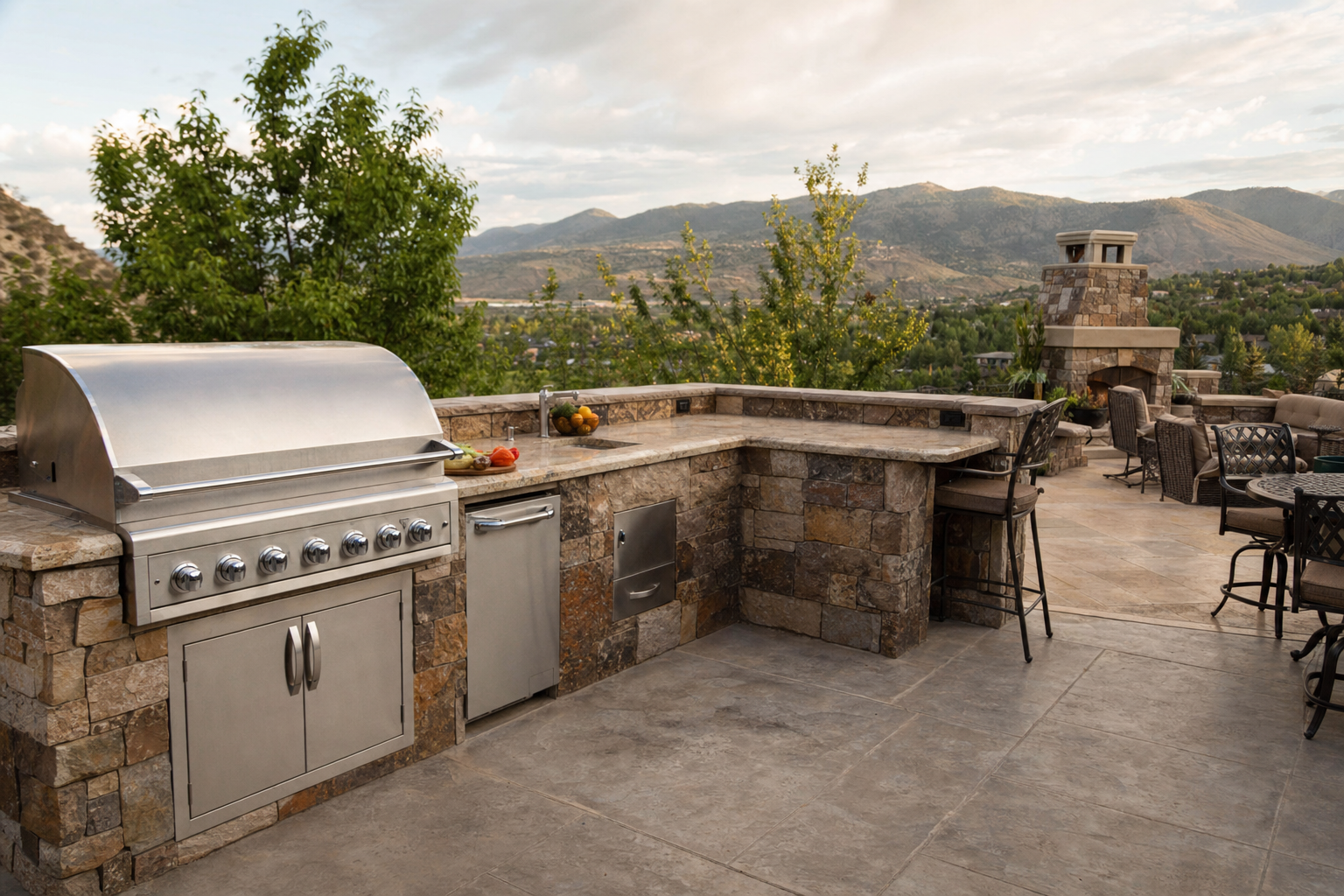
Outdoor kitchen installation in Carson City, NV involves building a permanent, weather-resistant cooking and entertaining structure in your backyard, typically using materials like concrete block, natural stone, or pavers, with built-in appliances such as grills, burners, refrigerators, and sinks. A professionally installed outdoor kitchen is designed to handle Northern Nevada’s temperature swings, UV exposure, and freeze-thaw cycles while integrating with your existing hardscape.
Key Takeaways
- Carson City’s climate requires materials and construction methods that can handle extreme heat in summer and hard freezes in winter.
- Most outdoor kitchen failures trace back to poor substrate planning, not the appliances themselves.
- Integrating your outdoor kitchen with existing hardscape features like paver patios or artificial turf produces a more cohesive, functional result.
- A 3D rendering before construction helps homeowners avoid layout mistakes that are expensive to fix after the fact.
- Outdoor kitchen projects in Carson City typically require permits, and skipping that step creates real problems at resale.
Why Your Backyard Feels Incomplete Even After One Good Project
This is one of the most common things we hear from homeowners who have already invested in one backyard upgrade. They put in artificial turf, or they had a paver patio installed, and suddenly the space looks better than it ever has. But better is a comparison, and now the comparison is between a clean, finished surface and whatever is sitting next to it. A freestanding gas grill on wheels, extension cords running across the yard, no counter space, no shade structure, no place to set a drink. The improvement you already made makes everything else look worse by contrast.
This is not a cosmetic complaint. It is a functional one. A yard that is half-finished creates friction every time you try to use it. You are carrying things in and out of the house, managing cords, cleaning up a grill that has no permanent home. By July, when you actually want to be outside every evening, that friction is enough to send people back inside. The backyard becomes a place you look at rather than a place you live in.
That is the real cost of a disconnected outdoor space, and it is exactly what a well-planned outdoor kitchen installation addresses. Not just the cooking, but the whole rhythm of how you use the yard.
What Causes Outdoor Kitchen Projects to Fail in Northern Nevada?
The number one cause of outdoor kitchen failure in this region is not the appliances. It is the substrate and the structural base underneath everything. Carson City sits at roughly 4,700 feet in elevation, and the temperature swings here are punishing. Summer afternoons regularly push past 95 degrees, and winter nights drop well below freezing. That freeze-thaw cycle is brutal on any material that was not properly prepared for it. Concrete that was poured without adequate depth, grout that was not rated for outdoor use, countertop materials that absorb moisture, all of these fail in predictable ways when the seasons change.
The second most common cause is poor drainage planning. An outdoor kitchen that sits in a low spot, or that was built without thinking about where water goes during a summer thunderstorm, ends up with standing water around the base. That moisture works its way into the structure, accelerates freeze-thaw damage, and creates the kind of slow deterioration that is hard to see until it is already a significant problem.
We also see a lot of outdoor kitchens that were built without proper utility planning. Gas lines run by someone who was not licensed, electrical outlets that were not rated for outdoor use, plumbing that was never connected because the homeowner ran out of budget. These are not just inconveniences. They are safety issues and code violations that come up at resale.
Why Is Outdoor Kitchen Installation Carson City, NV Such a Common Request Right Now?
Part of it is timing. July is when people are actually living in their backyards, and the gap between what they have and what they want is most visible. But there is also something specific happening in Carson City and the surrounding Northern Nevada area. A lot of homeowners in neighborhoods near the Carson Range have invested in their properties over the past few years, and outdoor living spaces are the next logical step. The views from many Carson City properties are genuinely exceptional, and a well-designed outdoor kitchen turns that view into a destination rather than just a backdrop.
We have also seen a shift in how people think about entertaining since the early 2020s. The backyard is no longer just overflow space. It is where people actually want to host. A built-in outdoor kitchen, paired with features like outdoor lighting or a fire pit, creates an environment that a freestanding grill simply cannot replicate. If you are curious how this project compares to what homeowners in Reno are building, our earlier piece on outdoor kitchens in Reno, NV covers the planning side in detail.
What Are the Most Common Mistakes to Avoid?
The first mistake is skipping the design phase. We strongly recommend a 3D rendering before any construction begins. Layout decisions that seem obvious on paper, like which direction the grill faces, where the prep counter sits relative to the dining area, where the refrigerator goes, become much clearer when you can actually see them in context. Moving a built-in appliance after the fact is not like rearranging furniture. It involves cutting into masonry.
The second mistake is treating the outdoor kitchen as a standalone project. The best results we see come from homeowners who plan the kitchen alongside the surrounding hardscape, a paver patio, a retaining wall, or an artificial turf area. When those elements are designed together, the transitions are clean and the space functions as a whole. When they are added piecemeal, you end up with awkward grade changes, mismatched materials, and surfaces that do not drain correctly toward each other.
The third mistake is underestimating permitting. Carson City requires permits for outdoor kitchens that include gas lines, electrical, or plumbing. This is not optional, and it is not something to work around. A permitted project protects you at resale and ensures the work was done to code.
When Should You Call a Professional for Outdoor Kitchen Installation Carson City, NV?
The honest answer is: before you buy anything. We have worked with homeowners who purchased appliances, countertop materials, or prefabricated kitchen frames before anyone looked at their yard, and those purchases often do not fit the space, the grade, or the utility access that actually exists. A professional assessment at the start saves real money and prevents the frustration of working backward from a purchase that does not work.
You should also call a professional if your yard has any grade change, any drainage concern, or any existing hardscape that the kitchen needs to connect to. These are not complications that make a project impossible. They are exactly the kind of conditions our team works with regularly across Carson City and the broader Northern Nevada area. You can see the full range of what we build at our Carson City service page, and our fire pit installation post for Carson City gives a good sense of how we approach projects in this specific area.
If you are already past the planning stage and want to talk through what outdoor kitchen installation Carson City, NV actually looks like for your property, reach out to our team. We work through the details before anything gets built, and that is where the difference between a project you are proud of and one you regret is actually made.
Frequently Asked Questions
How long does outdoor kitchen installation take in Carson City, NV?
Most outdoor kitchen installations in Carson City take between one and three weeks from the start of construction, depending on the complexity of the build and the utility connections required. Projects that include gas line installation, electrical work, or significant grading can take longer. The design and permitting phase typically adds two to four weeks before construction begins, which is why starting the conversation in early summer gives you the best chance of finishing before the season ends.
What materials hold up best for an outdoor kitchen in Northern Nevada’s climate?
Concrete block frames with natural stone or porcelain tile cladding perform well in Carson City’s freeze-thaw conditions. Porcelain countertops rated for outdoor use outperform natural granite in this climate because they are non-porous and less likely to absorb moisture that expands during freezing. Stainless steel appliances with marine-grade ratings handle the UV exposure and temperature swings better than standard residential appliances.
Do I need a permit for an outdoor kitchen in Carson City?
Yes. Any outdoor kitchen that includes a gas line connection, electrical outlets, or plumbing requires permits from Carson City. Skipping permits is a common shortcut that creates real problems during a home sale, since unpermitted work typically needs to be disclosed and can complicate financing. Our team handles the permitting process as part of every outdoor kitchen project we build.
Can an outdoor kitchen be added next to existing artificial turf?
Yes, and it is one of the more common combinations we build. The key is making sure the transition between the turf edge and the kitchen base is properly finished and that drainage from the kitchen area does not pool against the turf. When both elements are planned together, the result is a clean, cohesive space. If the turf was already installed, we assess the existing grade and drainage before designing the kitchen layout.