
Turn Your Boring Patio Into an Outdoor Kitchen Landscaping Masterpiece
That neglected patio gathering dust behind your Northern Nevada home holds more potential than you might realize. As cooler weather settles across the high desert landscape, homeowners throughout the region are discovering how outdoor kitchen landscaping can revolutionize their backyard spaces, turning forgotten concrete slabs into vibrant extensions of their homes where memories unfold naturally.
The shift from basic patio to fully functioning outdoor culinary space represents more than just an upgrade. It’s about reclaiming square footage you already own and transforming it into something extraordinary. Whether you’re hosting weekend barbecues or enjoying quiet evening dinners under the stars, the right design approach makes all the difference.
Why Fall Makes Perfect Sense for Outdoor Kitchen Projects
Northern Nevada’s crisp autumn weather creates ideal conditions for landscape construction. With temperatures hovering in the comfortable 60s and 70s, contractors can work efficiently without the extreme heat that makes summer installations challenging. Starting your project now means everything will be ready when spring entertaining season arrives.
The timing also aligns perfectly with material availability. Many suppliers offer seasonal deals on pavers, natural stone, and outdoor appliances. Plus, landscape crews typically have more scheduling flexibility as the busy summer rush winds down, allowing for more personalized attention to your project’s details.
Essential Elements Every Outdoor Kitchen Needs
Creating a functional outdoor kitchen requires thoughtful integration of multiple components. Each element should work harmoniously with your existing landscape while serving a specific purpose.
Surface Materials That Work in Nevada
Your choice of flooring sets the stage for everything else. In our high-desert climate, certain materials perform better than others. Consider these proven options that withstand temperature extremes while maintaining their appearance:
- Travertine pavers stay naturally cool underfoot even during hot afternoons and provide excellent slip resistance when wet
- Concrete pavers offer budget-friendly versatility with countless style options to match any home architecture
- Natural flagstone complements our regional aesthetic perfectly while requiring minimal maintenance
- Porcelain tiles resist staining and temperature swings better than traditional ceramic options
When selecting materials for your paver patio and walkway installation, consider how these surfaces will connect with your existing hardscaping to create a cohesive outdoor living space.
Building Your Cooking Zone Right
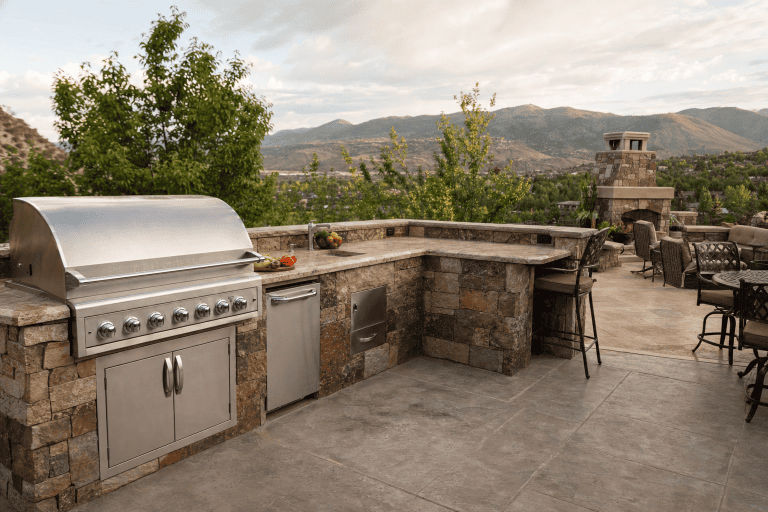
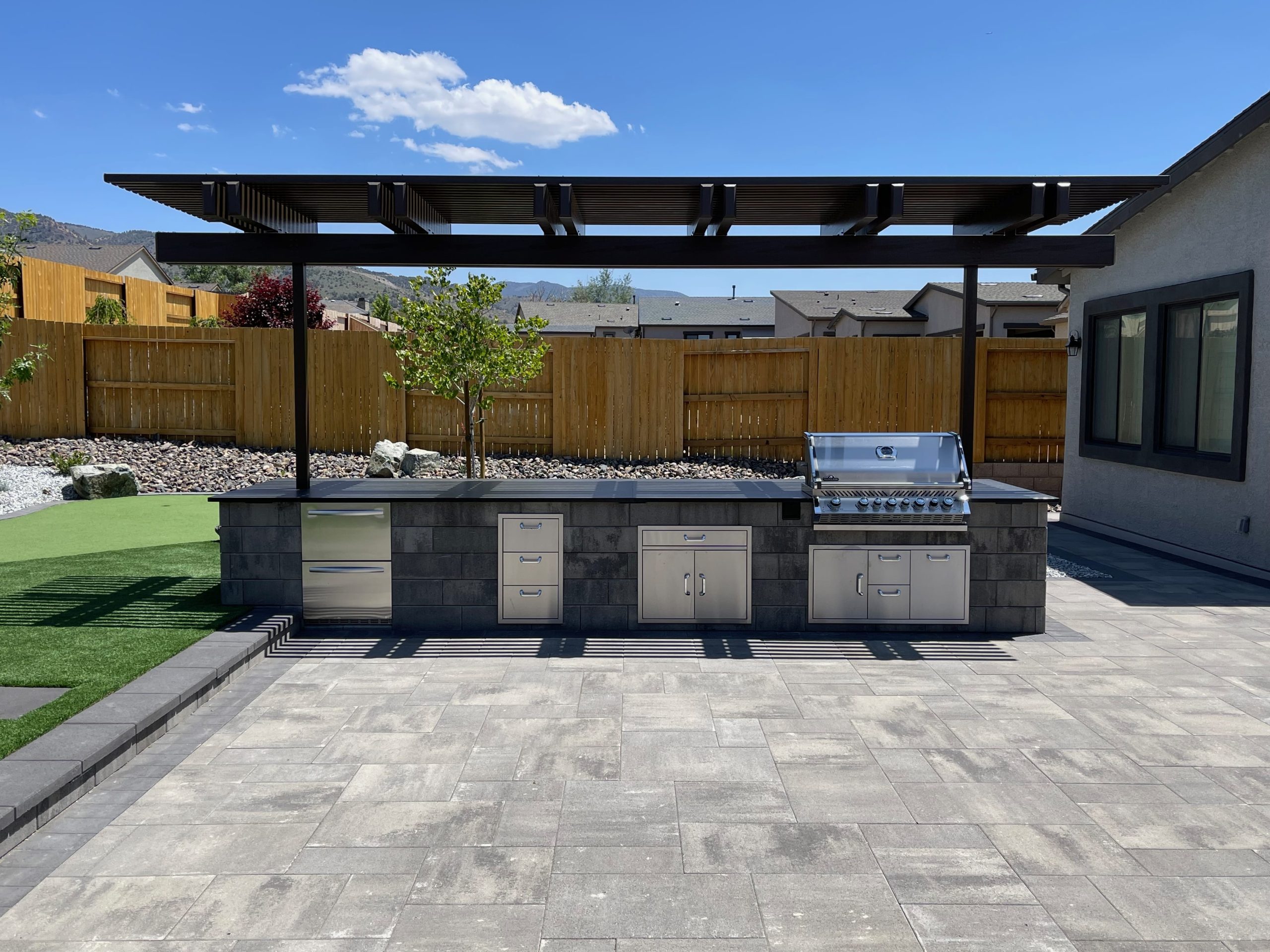
The heart of any outdoor kitchen landscaping project centers on the cooking area itself. Modern designs go far beyond the traditional grill setup and incorporate multiple functional elements that work together seamlessly:
- Adequate counter space with at least 24 inches on each side of your grill provides room for prep work and plating
- Weatherproof storage cabinets keep tools, seasonings, and supplies organized and protected from the elements
- Task lighting fixtures positioned strategically ensure safe meal preparation after sunset
- Proper utility connections including gas lines, GFCI electrical outlets, and water access eliminate the need for extension cords or garden hoses
- Ventilation planning becomes crucial for covered cooking areas to prevent smoke accumulation
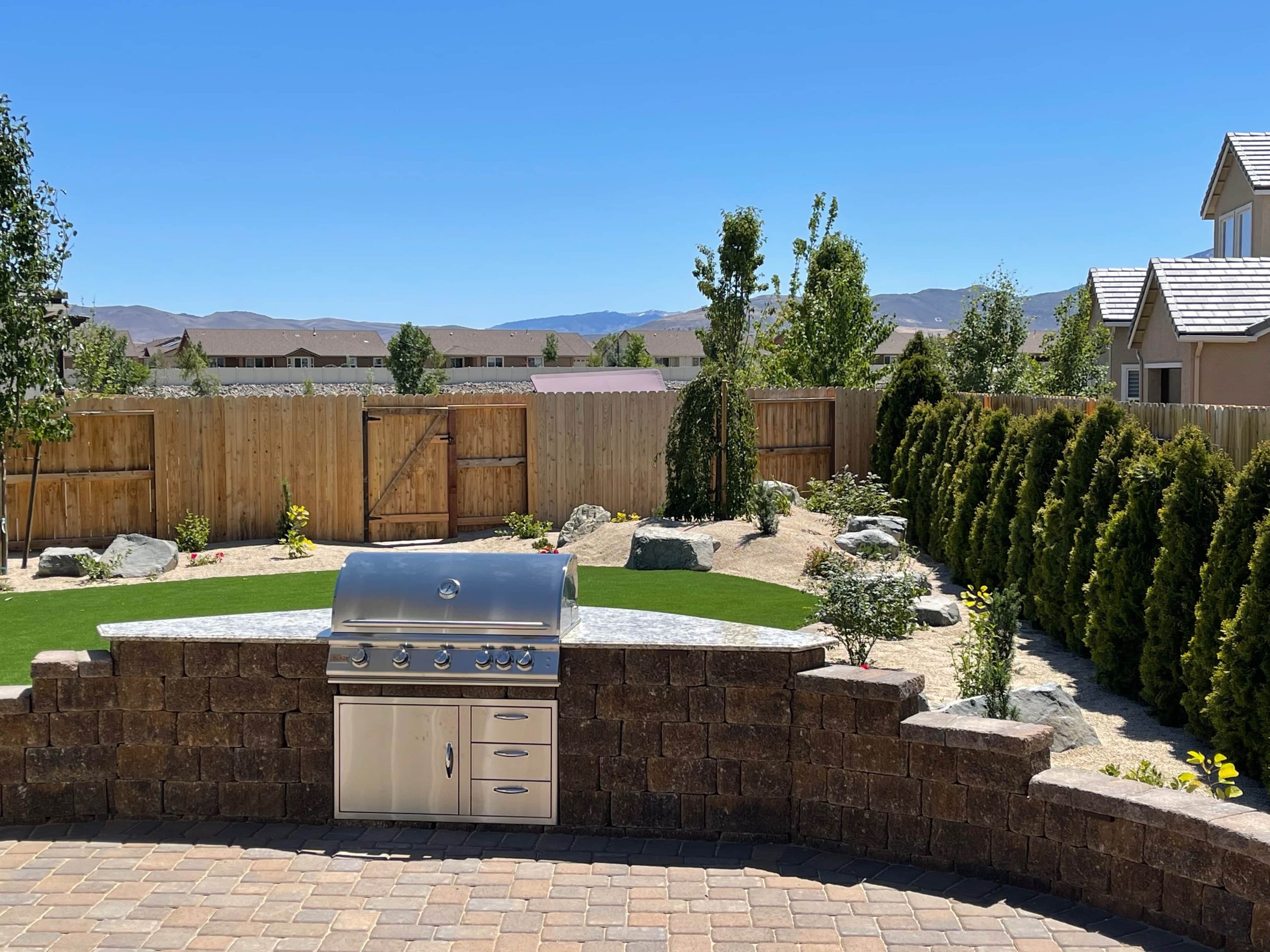
Built-in grills anchored in custom stone or stucco bases create a permanent, professional appearance while maximizing functionality. Adding a pizza oven or smoker expands your culinary options, and both thrive in our dry climate.
Smart Ways to Blend Hardscape With Nature
Successful outdoor kitchen landscaping balances manufactured materials with organic touches. This harmony prevents your space from feeling too industrial or disconnected from the surrounding environment.
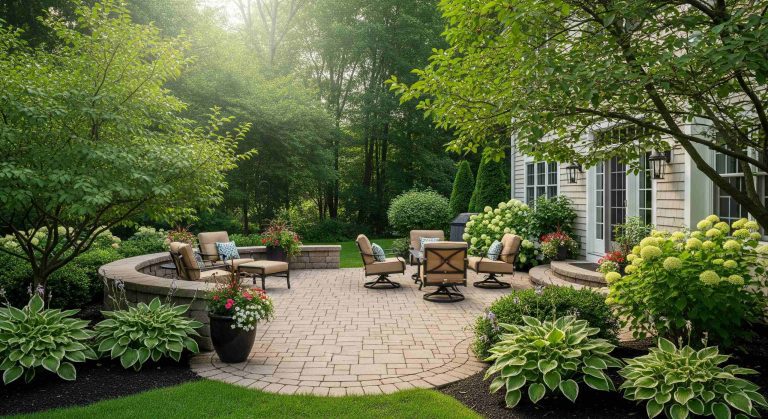
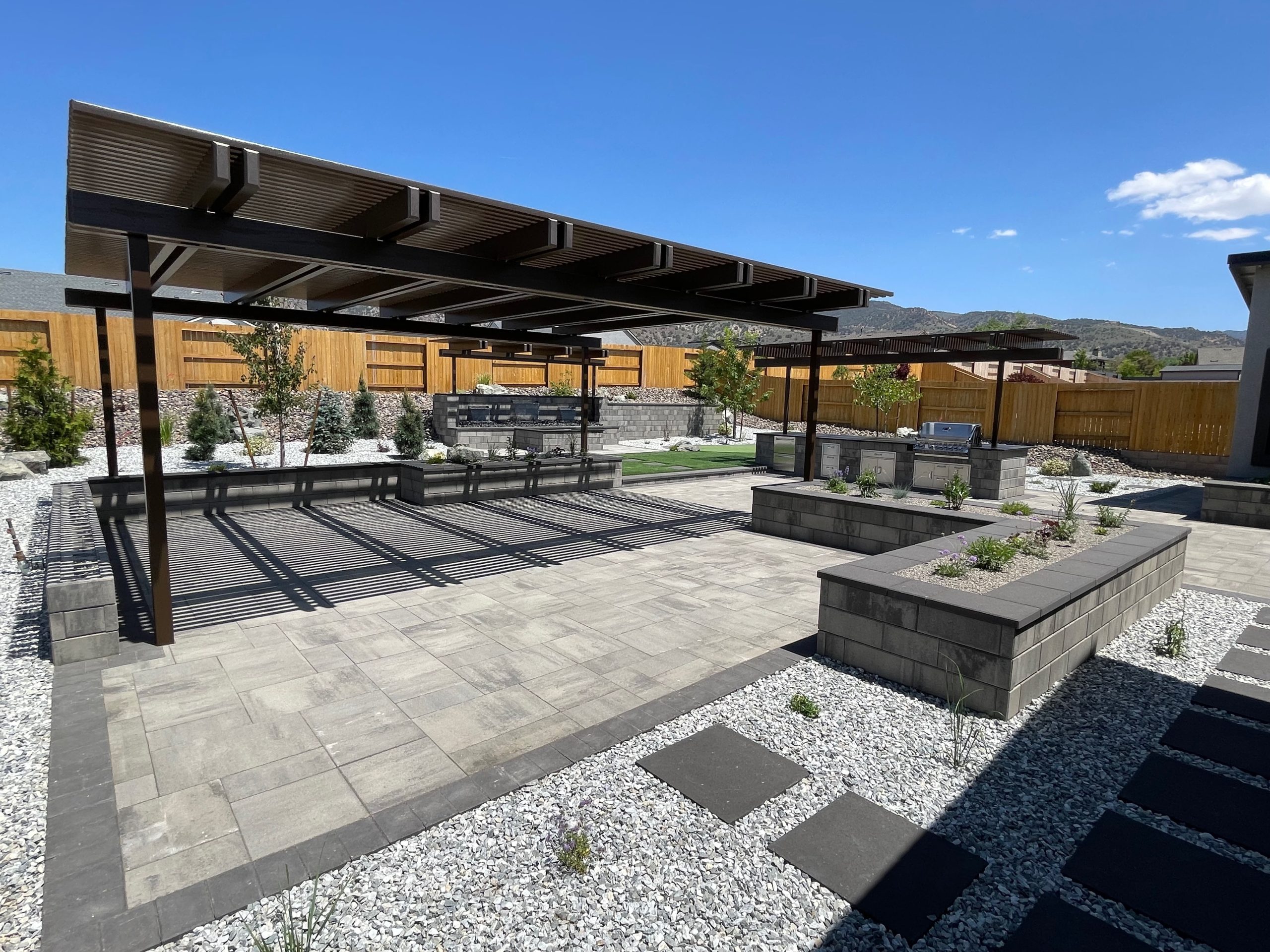
Strategic plant placement adds life and color to your outdoor kitchen. Raised planters help define boundaries between cooking and dining areas. Herb gardens positioned within arm’s reach of prep areas provide fresh ingredients while adding fragrance. Ornamental grasses create natural privacy screens, and carefully placed shade trees offer relief from afternoon sun.
Native and adapted plants work best in our region. Russian sage, desert marigold, and native bunch grasses thrive with minimal water while adding texture and movement to your design. Learn more about sustainable landscape design for outdoor spaces to create an eco-friendly entertainment area.
Creating Comfortable Gathering Spaces
Your outdoor kitchen should encourage lingering conversations and relaxed meals. Think beyond basic seating to create distinct zones for different activities. Each zone serves a specific purpose while maintaining visual connection to the cooking area.
Bar seating placed adjacent to the cooking area allows guests to chat with the chef while meals are prepared. A dedicated dining area positioned 8 to 12 feet away provides comfortable distance from cooking heat and smoke. Lounge spaces with soft seating work best when placed 12 to 20 feet from active cooking zones. If children are part of your household, designate an open play area within sight lines but far enough away to avoid accidents.
Adding Fire and Water Features for Ambiance
Nothing elevates outdoor kitchen landscaping quite like the primal elements of fire and water. These features create atmosphere while extending the usability of your space throughout the seasons.
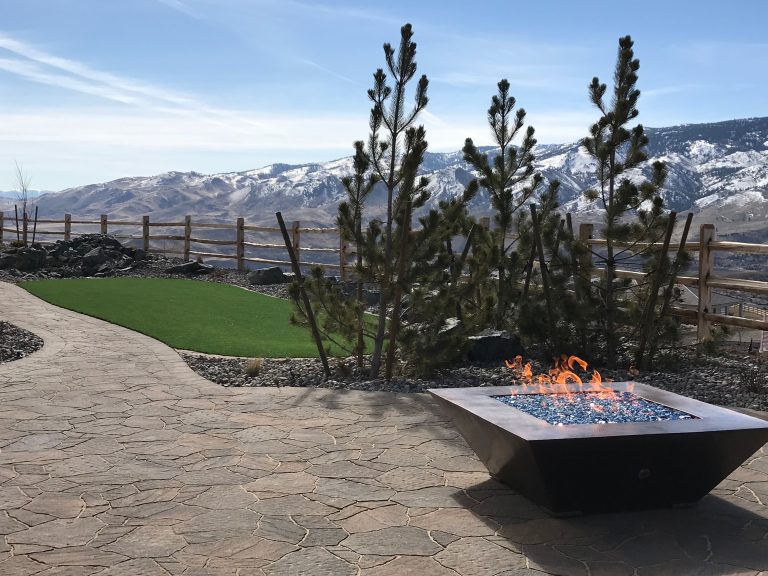
Fire features come in many forms to suit different needs and budgets. Built-in fire pits provide warmth and become natural gathering spots for evening conversations. Outdoor fireplaces add architectural interest while creating a cozy atmosphere. Fire tables combine practical seating with warming flames, while overhead heat lamps offer targeted warmth without taking up floor space.
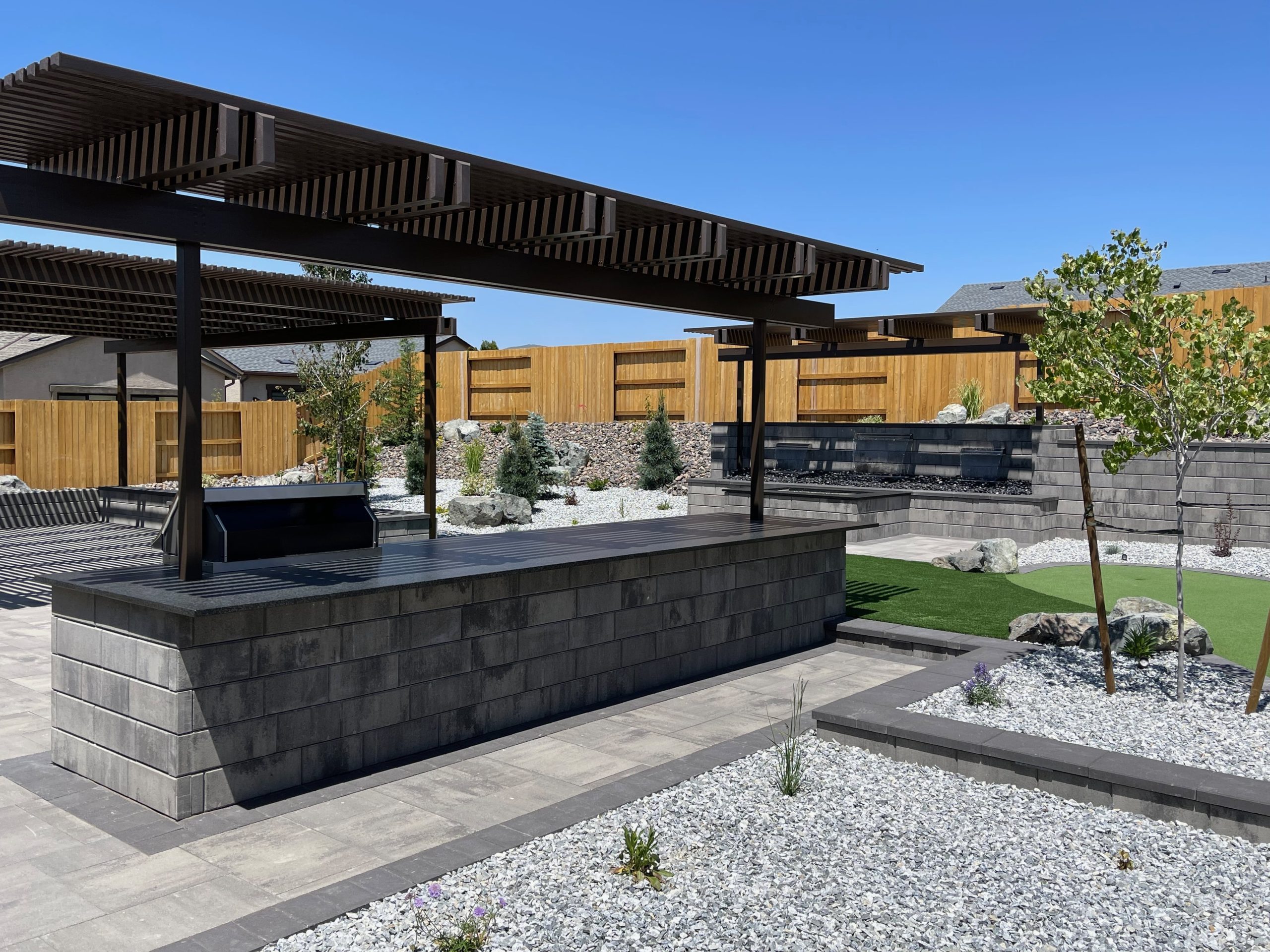
Water features offer cooling effects during hot summers while adding soothing background sounds. A simple wall fountain near the dining area masks neighborhood noise effectively. Larger installations become stunning focal points visible from inside your home, increasing property value while enhancing daily enjoyment.
Making Your Outdoor Kitchen Work Year Round
Our regional climate offers surprisingly long outdoor seasons when spaces are properly designed. Smart planning ensures your investment delivers value throughout the year by addressing weather challenges proactively:
- Install retractable awnings or pergolas that provide adjustable shade during summer while allowing warming sun through during cooler months
- Add infrared heaters mounted overhead or in strategic locations to extend comfortable usage into shoulder seasons
- Include proper drainage systems to handle sudden downpours and prevent water damage to materials and appliances
- Select weather-resistant materials that withstand temperature extremes without cracking, fading, or deteriorating
- Plan windbreaks using decorative screens or partial walls to protect cooking and dining areas from prevailing winds
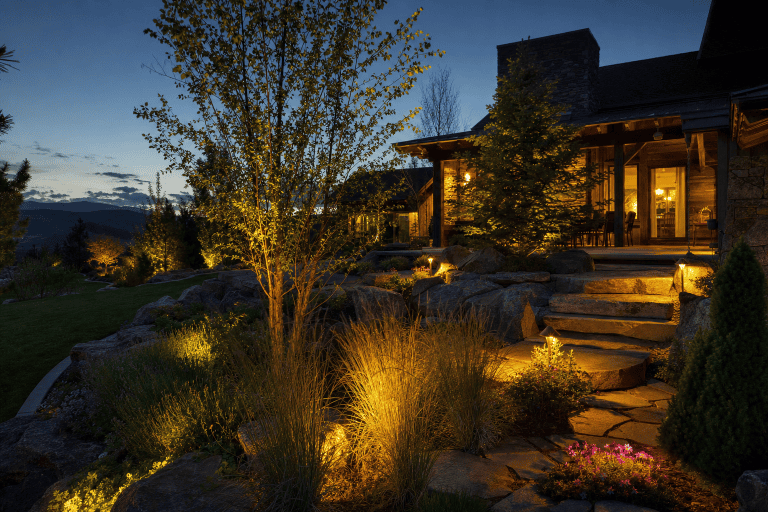
Professional outdoor lighting installation extends the usability of your space well into evening hours, creating ambiance while ensuring safety for all your outdoor activities.
Expensive Mistakes to Avoid
Even well-intentioned outdoor kitchen landscaping projects can stumble without proper planning. Understanding common pitfalls helps ensure your project succeeds from the start.
Underestimating utility needs leads to costly retrofitting later. Running gas and electrical lines after hardscaping installation requires tearing up completed work. Ignoring prevailing wind patterns results in smoke blowing toward seating areas, ruining the dining experience. Choosing high-maintenance materials creates ongoing work that diminishes enjoyment. Inadequate lighting limits evening use and creates safety hazards. Skipping proper permits can result in fines and required removal of completed work.
Your Next Steps Toward Outdoor Living
Transforming that underused patio into a thriving outdoor kitchen takes more than wishful thinking. It requires careful planning, quality materials, and experienced execution. As you envision family gatherings around your new pizza oven or quiet mornings with coffee at your outdoor bar, remember that the best designs grow from understanding both your space’s potential and your family’s needs.
The window for fall installation is open but closing fast. With proper planning starting now, you’ll be hosting unforgettable gatherings by next spring. Whether you’re drawn to sleek modern designs or rustic regional aesthetics, your outdoor kitchen landscaping project begins with that first conversation about possibilities.
Ready to explore what your backyard could become? Rock Solid Landscape brings over two decades of experience creating outdoor living spaces throughout Northern Nevada. Connect with their design team at (775) 618-0621 or visit rocksolidnv.com to start transforming your patio from forgotten to unforgettable.
Frequently Asked Questions
What’s the best flooring material for outdoor kitchen landscaping in Nevada’s climate?
Travertine pavers and natural flagstone perform best in Nevada’s high-desert climate, staying cool underfoot and resisting temperature extremes. Porcelain tiles are a good low-maintenance option, while concrete pavers work well for budget-friendly installations.
How much counter space do I need around my outdoor grill?
Plan for at least 24 inches of counter space on each side of your grill for safe prep work and plating. This provides adequate room for tools, ingredients, and serving dishes while maintaining comfortable workflow during cooking.
Can I use my outdoor kitchen year-round in Northern Nevada?
Yes, with proper planning including retractable awnings, infrared heaters, windbreaks, and weather-resistant materials. Professional outdoor lighting extends usability into evening hours throughout all seasons.
What utilities do I need to install for an outdoor kitchen?
Essential utilities include gas lines for grills, GFCI electrical outlets for appliances, water access for sinks and cleaning, and proper drainage systems. Planning utilities before hardscaping helps avoid costly retrofitting later.
How far should dining areas be from the cooking zone?
Position dining areas 8–12 feet from cooking zones for comfortable distance from heat and smoke while maintaining visual connection. Bar seating works well adjacent to cooking areas, while lounging spaces should be 12–20 feet away.