
Paver Patio Installation in Reno, NV: What to Know Before You Build
If you’re thinking about adding a paver patio this spring, Reno, NV is one of the better places in the West to do it, but only if the work is designed around the local climate. Reno gets plenty of sun, but it also deals with hard freezes, dramatic day-to-night temperature swings, and high desert soils that behave very differently from coastal or low-elevation markets. That affects base preparation, drainage, material choice, and long-term durability. Paver patio installation in Reno, NV is not complicated when the process is handled correctly, but it does require a crew that understands what this region does to hardscapes year after year.
Why Reno’s Climate Makes Base Preparation Non-Negotiable
The Truckee Meadows sits at roughly 4,500 feet in elevation. That means real freeze-thaw cycles, not the mild winter dips you see in warmer climates. When moisture gets trapped beneath a patio surface and then freezes, it expands. If the base layer was not compacted properly or does not drain well, that expansion can push pavers up and out of alignment. The Federal Highway Administration’s concrete pavement guidance explains how moisture and freeze-thaw exposure affect paved surfaces, and the same principle is why residential patio bases need to be built correctly from the start.
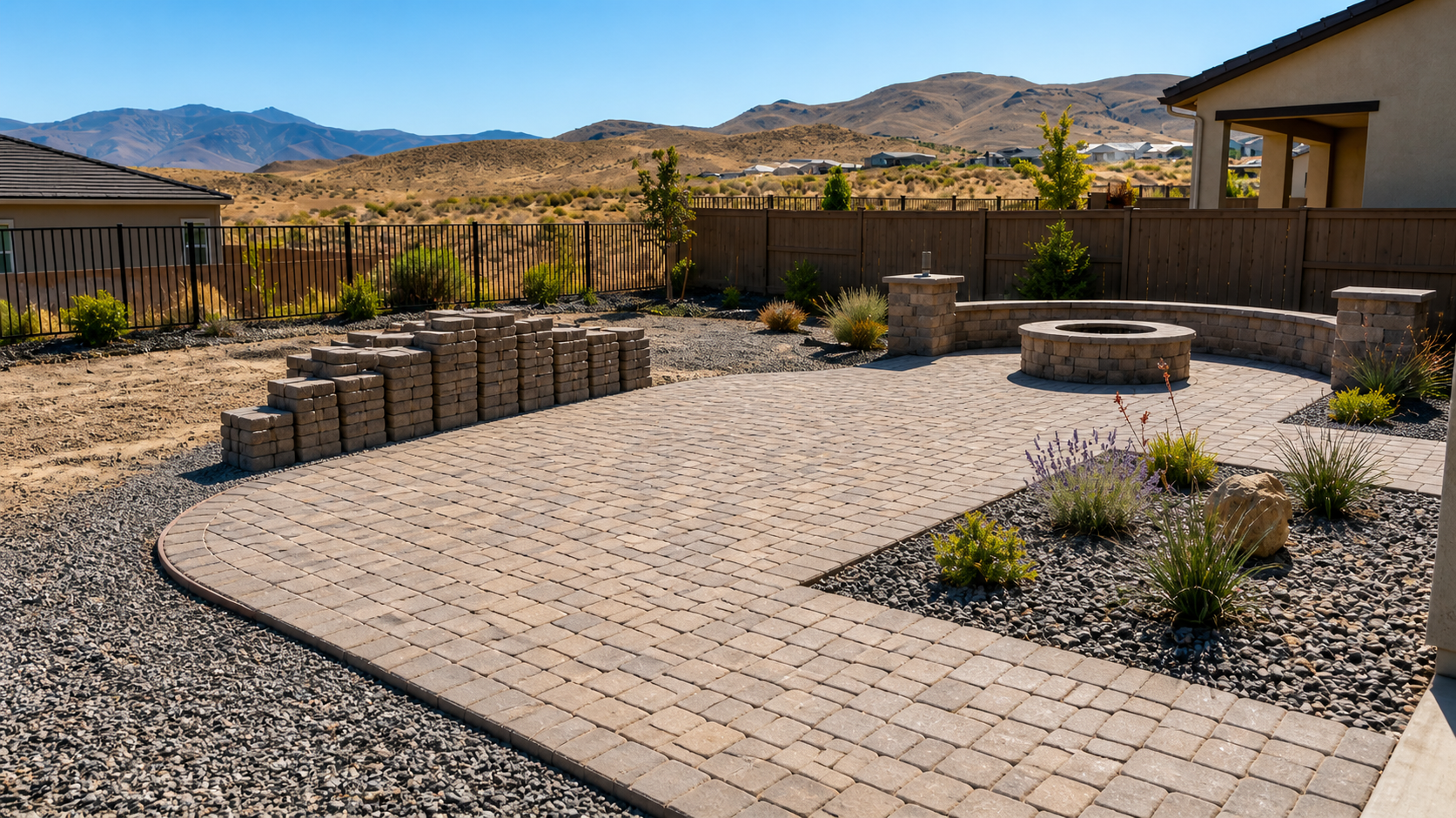
Proper installation starts well below the surface. Our process includes excavating to the right depth, laying a compacted aggregate base sized for local conditions, and accounting for drainage before a single paver goes down. The finished surface is only as good as what is underneath it. In a climate like Reno’s, that is not a detail you can skip to save time or money.
April and May are smart times to start the conversation. The ground has thawed, temperatures are consistently workable for installation, and you are ahead of the summer rush when scheduling gets tight. If you want your patio finished before the heat of July, spring is the right window to plan.
What Reno Homeowners Usually Ask Before Building
Most paver patio questions fall into a few buckets: how long the project takes, what it costs, and whether pavers are worth it compared with a poured concrete slab. Here is our honest take.
Timeline depends on size and complexity, but a typical residential patio takes about two to five days of active installation once materials are on site. Design and planning add time upfront, and that time is worth it. Rock Solid Landscape provides 2D and 3D renderings so you can see how the finished space will work before any dirt moves.
On cost, pavers usually cost more than poured concrete at the outset. They are also easier to repair. If a section settles or a single paver cracks, it can be lifted, corrected, and reset without tearing up the entire surface. A cracked concrete slab is a much bigger problem. In Reno’s freeze-thaw environment, that repairability matters.
As for whether pavers are worth it, the answer depends on how you want to use the space. For homeowners in areas like South Meadows, Damonte Ranch, and Caughlin Ranch, a well-built patio can turn an underused yard into a practical outdoor living area for dining, relaxing, and entertaining.
Choosing the Right Paver for Reno’s Sun and Temperature Range
Not all pavers perform the same under UV exposure and thermal cycling. Reno sun is intense, and some lighter-colored or lower-density products can fade noticeably after a few summers. We work with materials that are built for high-sun environments and that hold their color and structural integrity over time.
Concrete pavers are the most common choice we install because they are durable, available in a wide range of styles, and perform well in our climate. Natural stone options like travertine or flagstone can also work, especially for homeowners who want a more organic look. Each material has trade-offs in heat absorption, texture, maintenance, and budget, and we walk through those details before recommending a direction.
How the Rest of Your Yard Fits Into the Picture
A paver patio rarely exists in isolation. Many Reno projects combine the patio with outdoor kitchens, fire pits, lighting, retaining walls, or water features. When everything is designed together from the start, the result is more cohesive and the construction process is more efficient. Trying to add a fire pit or wall after the patio is already down can mean disrupting work that was already finished.
We also think about irrigation and turf at the same time, especially in a high desert environment where water-smart landscaping matters. The University of Nevada, Reno Extension offers helpful guidance on residential landscaping during drought, and a good patio plan should support the rest of the yard instead of fighting it.
Frequently Asked Questions About Paver Patios in Reno
How long does paver patio installation take in Reno?
A typical residential paver patio takes about two to five days of active installation once materials are on site. Larger patios, complex patterns, walls, lighting, or outdoor kitchen features can add time.
Are pavers better than poured concrete in Reno’s climate?
Pavers often make more sense because individual units can be repaired or reset if movement occurs. In a freeze-thaw climate, that flexibility can be a major advantage over a single concrete slab.
When is the best time to install a paver patio?
Spring is one of the best times to start. The ground is workable, temperatures are mild, and planning early helps you avoid the busiest part of the summer schedule.
Ready to Plan a Paver Patio in Reno?
If you are ready to see what a paver patio could look like in your specific yard, Rock Solid Landscape can walk the property with you, talk through materials and layout, and build a rendering before work begins. Spring bookings fill up faster than most people expect, so the best time to plan is before the summer heat arrives. Contact Rock Solid Landscape to start the conversation.