
Paver Walkway Installation in Spanish Springs, NV
If you have ever dug more than a few inches into the ground in Spanish Springs, you already know what we are working with: a hard, compacted caliche-like layer that sits just below the surface and does not move easily. That subsurface condition, common across the high desert terrain north of Reno, NV, has a direct effect on how paver walkways get built and how long they last. Paver walkway installation in Spanish Springs, NV requires a different level of base preparation than most homeowners expect, and getting that foundation right is what separates a walkway that stays flat for decades from one that shifts after the first winter frost cycle.
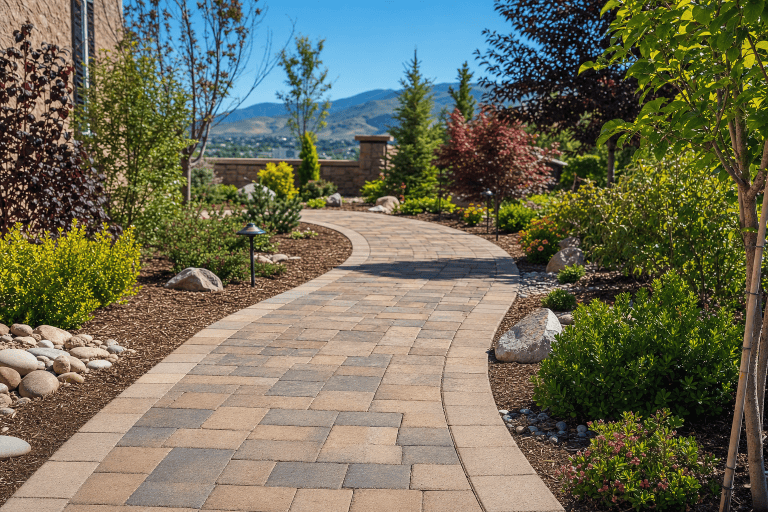
Paver walkway installation in Spanish Springs, NV means excavating the existing ground, installing a compacted aggregate base, laying a sand setting bed, placing the pavers in the chosen pattern, and finishing with polymeric sand and sealant. Most projects take one to three days and produce a durable, low-maintenance surface that handles the region’s freeze-thaw cycles without cracking.
Key Takeaways
- Spanish Springs’ hard, caliche-heavy subsoil requires deeper excavation and more aggressive compaction than softer-soil regions.
- Dry summer conditions can make base compaction and paver setting more predictable, while careful scheduling still accounts for sudden storms.
- Paver walkways in this climate need polymeric sand and a quality sealant to prevent joint erosion from monsoon-season rain events.
- Proper drainage planning is essential in Spanish Springs, where water has limited places to go on graded desert lots.
- Pairing a new walkway with outdoor lighting or outdoor steps maximizes the investment and improves safety.
1. The Ground Here Does Not Forgive a Shallow Base
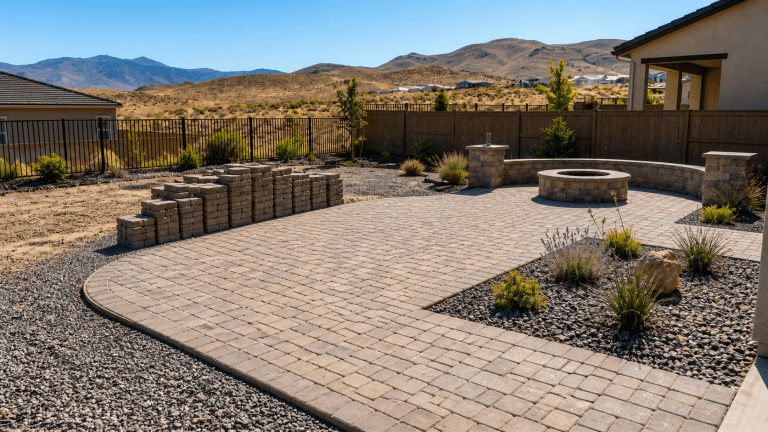
Spanish Springs sits on high desert terrain where the soil compacts into a dense, almost concrete-like layer a few inches down. That hardpan is stable in one sense, but it also means water does not drain through it freely, and any base material placed on top of it needs to be properly compacted or it will settle unevenly over time. We excavate to a minimum depth of six to eight inches for most walkway projects in this area, which is more than what contractors in softer-soil climates typically do. Cutting corners on base depth here is the single most common reason paver walkways develop low spots and trip hazards within a few years. Because conditions vary by property, homeowners can use the USDA Natural Resources Conservation Service’s Web Soil Survey as an initial soil-planning reference before onsite excavation confirms the actual base requirements.
2. What Does Paver Walkway Installation in Spanish Springs, NV Actually Cost?
Material choice is the biggest variable in project cost. Concrete pavers in standard sizes and finishes run significantly less than tumbled natural stone or large-format slabs, and the price difference per square foot adds up quickly on longer walkways. Labor costs in the Spanish Springs and greater Reno area reflect the skilled base work required by local soil conditions, so budget estimates from contractors who have not worked in this specific terrain may come in lower than what the project actually requires. For a realistic sense of scope before committing, our team offers design and rendering services so you can see the layout and get accurate pricing before any ground is broken.
3. Drainage Planning Is Not Optional in This Climate
Summer thunderstorms can deliver intense rainfall over short periods, and NOAA’s Precipitation Frequency Data Server provides location-specific estimates for planning around heavy rain. On a graded desert lot with limited vegetation and hard soil, that water has to go somewhere, and a poorly designed paver walkway can become a channel that directs it straight toward a foundation. We build a slight cross-slope into every walkway we install, and on properties with significant grade changes, we incorporate drainage channels or tie into existing site drainage. This is also why we often recommend pairing walkway projects with a retaining wall on sloped lots, since both systems work together to manage water movement across the property.
4. Polymeric Sand Is Worth the Upgrade
Standard jointing sand works fine in climates with mild weather, but in Spanish Springs the combination of intense UV exposure, occasional high winds, and summer rain events erodes plain sand joints faster than most homeowners expect. Polymeric sand activates with water and hardens into a semi-flexible compound that resists washout, discourages weed growth, and stays in place through freeze-thaw cycles. We use it as the standard finish on every paver walkway installation in Spanish Springs, NV project we complete, and we follow it with a penetrating sealant that protects the paver surface from UV fading and staining.
5. Pattern and Paver Size Affect More Than Just Looks
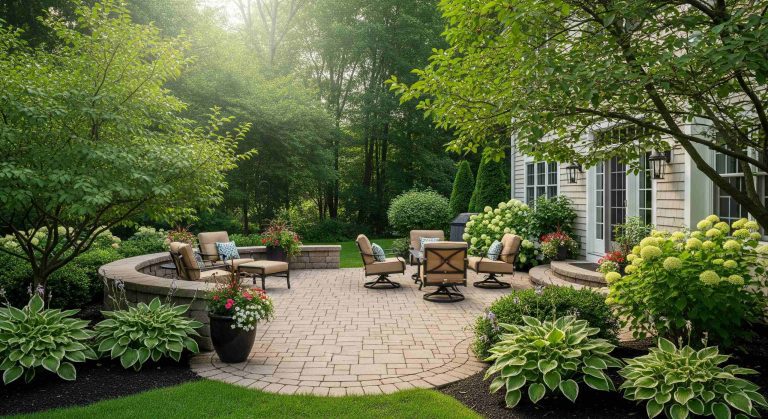
A running bond or herringbone pattern distributes load more evenly across the surface than a simple stacked pattern, which matters on walkways that see regular foot traffic or occasional equipment use. Smaller pavers also give us more flexibility to follow curves and navigate around existing site features like utility access points or established hardscape. If you are connecting a new walkway to an existing paver patio, matching the paver size and pattern creates a cohesive look and simplifies future repairs since replacement units will be easier to source.
6. How Does the Installation Timeline Work Around Spanish Springs Summers?
Northern Nevada’s dry summer stretches often create favorable conditions for paver installation. Stable ground helps crews compact the base consistently, but the schedule should still leave room for sudden rain during the critical setting period. The main scheduling consideration is that summer is peak season for hardscape contractors in the Reno area, so lead times tend to stretch. We recommend reaching out at least three to four weeks ahead of your target start date. If you are planning a larger project that combines a walkway with features like an outdoor kitchen or fire pit, earlier planning gives us time to sequence the work efficiently. Our post on paver patio installation in Reno, NV covers the broader timeline and process in more detail.
7. Lighting Transforms a Walkway From Functional to Finished
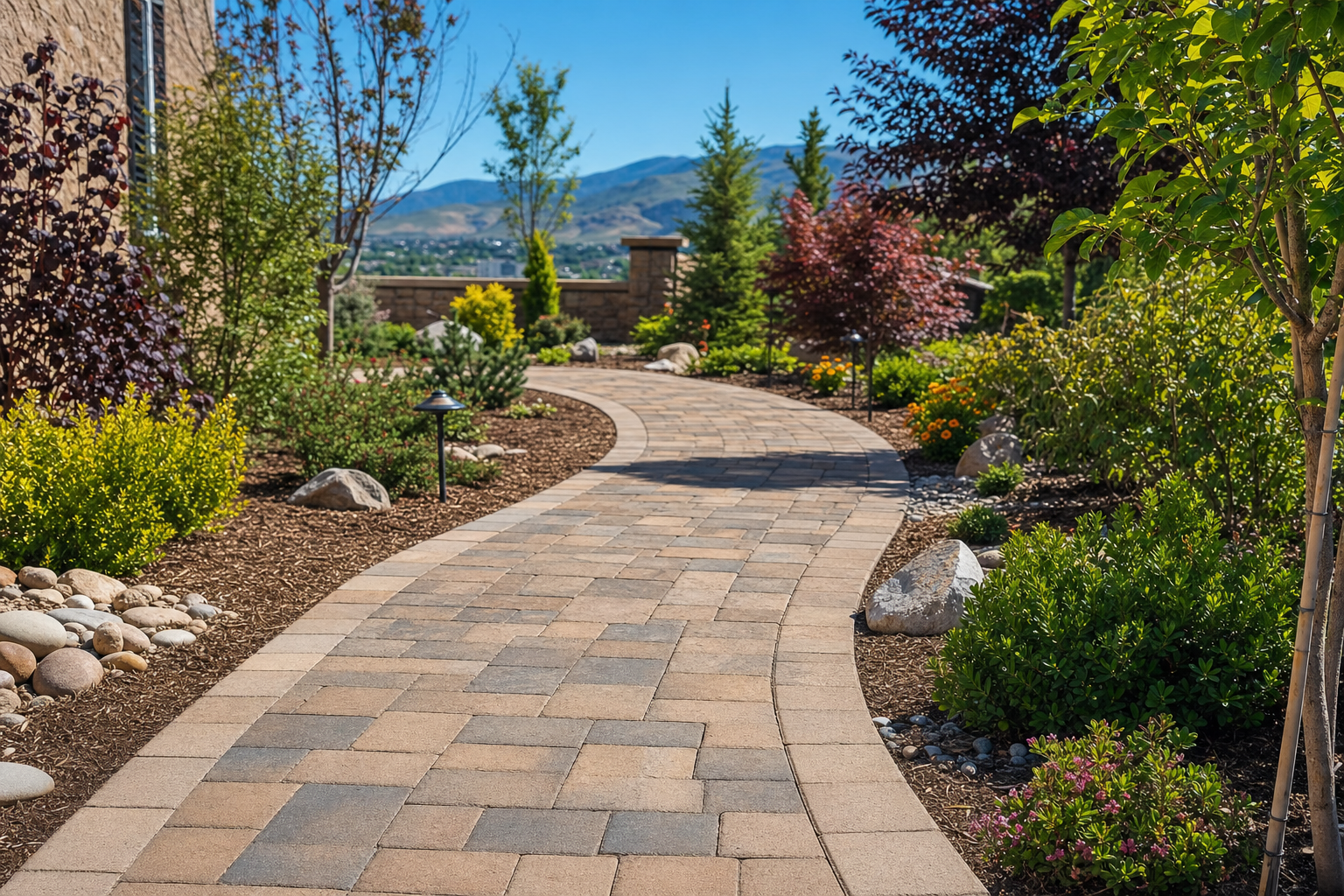
A paver walkway that looks great during the day can become a safety hazard after dark without proper lighting, especially on properties with grade changes or steps. Low-voltage path lights set into the paver border, or recessed lights built into step risers, add both safety and visual depth to the finished project. We often bundle outdoor lighting with paver walkway installation in Spanish Springs, NV projects because the wiring is easiest to route before the walkway is fully set. Retrofitting lighting into an existing paver surface is possible but requires more disruption to the finished joint work.
Frequently Asked Questions
How long does paver walkway installation take in Spanish Springs, NV?
Most residential paver walkway projects in Spanish Springs take one to three days from excavation to final sand and seal. Longer walkways, complex patterns, or sites that require significant grading or drainage work will add time. We give homeowners a realistic day-by-day schedule before we start so there are no surprises.
Do pavers hold up to the freeze-thaw cycles in Northern Nevada?
Concrete and natural stone pavers are well-suited to the Spanish Springs climate precisely because individual units can shift slightly and return to position without cracking, unlike poured concrete. The key is a properly compacted base that minimizes movement in the first place, combined with polymeric sand joints that flex without breaking down. We have installed paver walkways across the Reno, NV region that have held up for over a decade without significant settling.
Can I add a paver walkway to a yard that already has artificial turf?
Yes, and it is a common combination in Spanish Springs where homeowners want a clean, low-water yard. We cut a clean edge into the existing artificial turf and install a border restraint that keeps both surfaces tight and defined. The result looks intentional rather than retrofitted, especially when the paver pattern is chosen to complement the turf layout.
Does Rock Solid Landscape serve Spanish Springs specifically, or just Reno?
We serve Spanish Springs as part of our broader Northern Nevada service area, which includes Reno, Sparks, Carson City, and surrounding communities. You can see the full list on our service areas page. Spanish Springs projects are handled by the same crew and to the same standards as any project closer to central Reno.
Spanish Springs continues to grow, and more homeowners in the area are investing in hardscape that holds up to the climate rather than fighting it. A well-built paver walkway is one of the most practical upgrades a property can get, and dry-weather scheduling can make summer a practical time to move forward. Contact Rock Solid Landscape to talk through your project.