
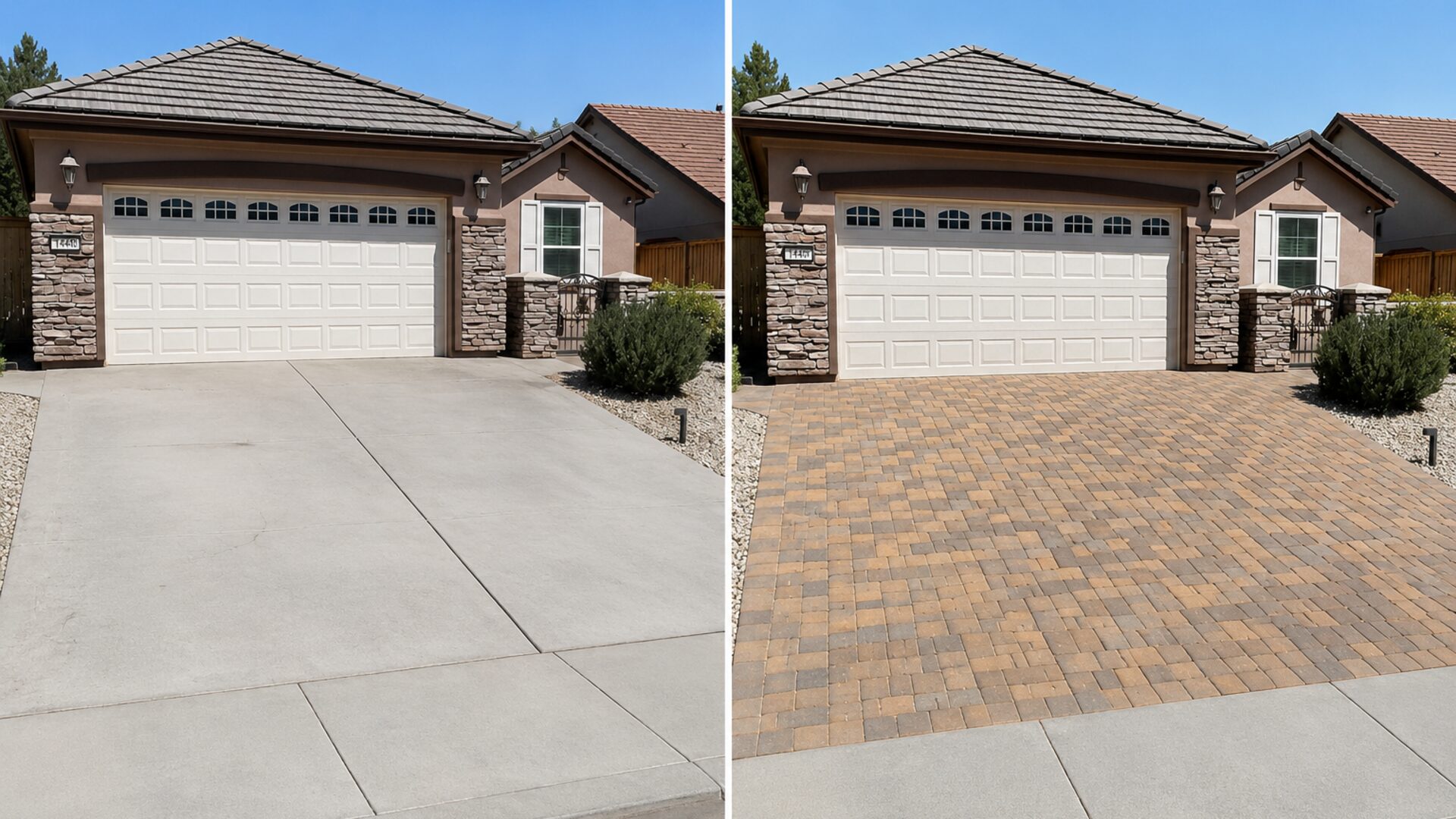
Concrete vs. Paver Driveways in Reno: Which One Actually Holds Up Here?
Homeowners in Reno and Sparks usually start this decision with cost, but the better first question is how the driveway will handle Northern Nevada conditions year after year. Between shifting soils, sharp temperature swings, and the occasional runoff event after snowmelt, the wrong material can look tired much sooner than expected.
If you are weighing the driveway as part of a larger project, our guide to the labor and material costs behind a Reno landscape quote explains why base depth and drainage move the number more than the surface does.
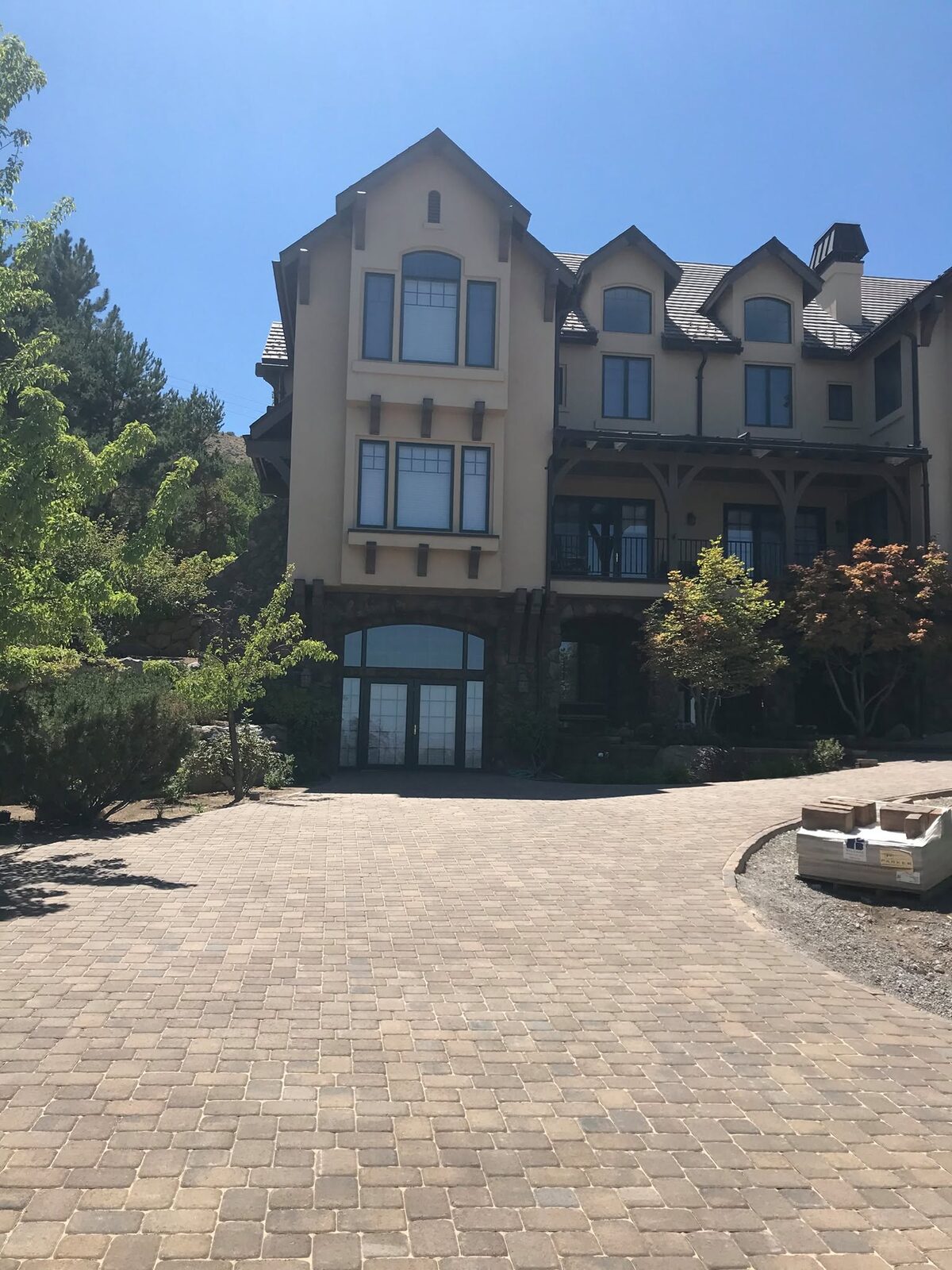
That is why so many homeowners comparing paver driveways in Reno with poured concrete end up focusing on long-term performance instead of just install-day price. The answer depends on the property, but for most residential sites here, pavers give you more flexibility and a better repair path when the ground moves.
How Concrete Performs
Poured concrete is a single continuous slab, typically four to six inches thick. It has a clean look, the upfront cost is usually lower, and most contractors understand the install process well, so pricing tends to be competitive.
The drawback is rigidity. Concrete does not flex, so when the base shifts or winter weather puts the slab through repeated expansion and contraction, cracks are common. Those freeze-thaw swings are a normal part of weather around Reno, and once a slab cracks, repairs are usually visible even after patching.
How Pavers Perform
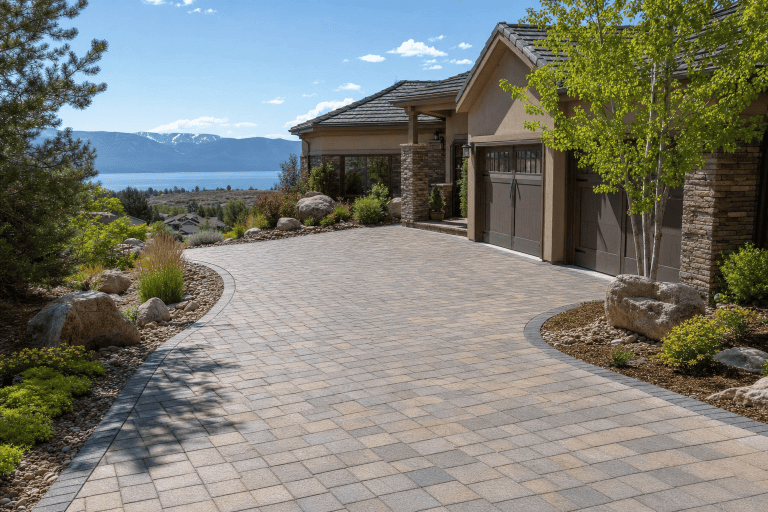
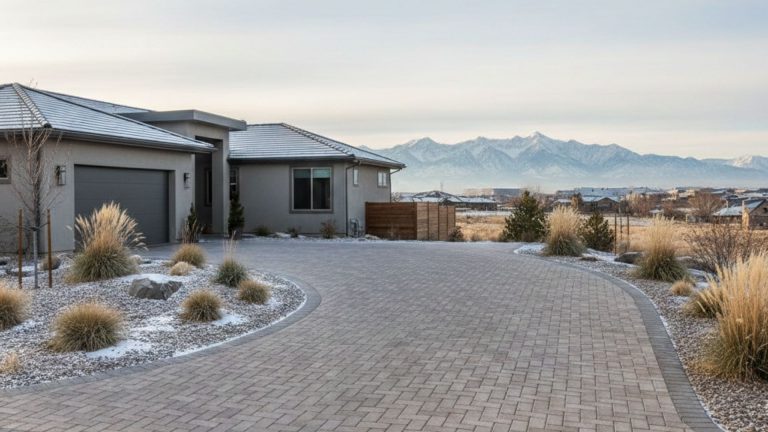
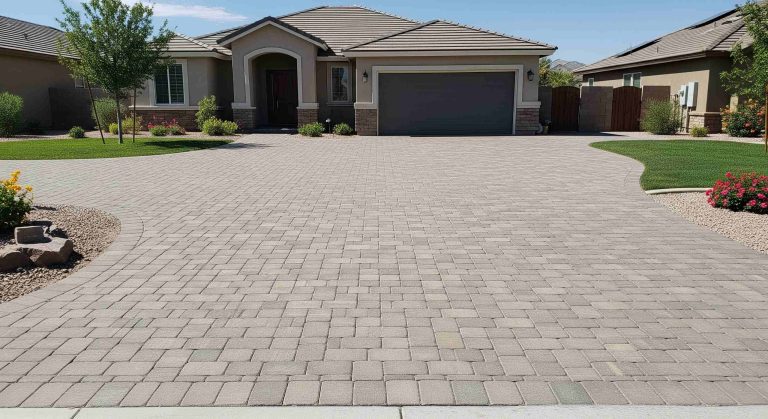
Paver driveways use individual interlocking units over a compacted gravel base. Because each unit can move slightly on its own, the surface handles stress much better than one large slab. That mechanical difference is the main reason pavers hold up so well in climates like ours.
Pavers also make repairs easier. If one area settles or gets damaged, individual units can be lifted and reset without tearing out the whole driveway. They also give homeowners far more options for color, pattern, and texture, especially when the driveway ties into nearby paver walkways, retaining walls, or outdoor lighting.
Where Concrete Still Makes Sense
Concrete is not always the wrong choice. If you are building a secondary parking pad, a utility area, or a more budget-sensitive surface where appearance matters less, a concrete slab can still be a reasonable option. The tradeoff is that you are accepting a surface that is harder to repair cleanly if movement shows up later.
Why Pavers Usually Win in Reno
Reno properties often deal with clay-heavy subsoil, elevation changes, and fast shifts between cold nights and warm afternoons. Those conditions are tough on any rigid surface. Pavers distribute stress across the system instead of forcing one slab to absorb all of it in one piece.
They also give you more control over drainage. When the driveway is designed with the right grading and base, the system can manage water more intentionally, which matters in a market where runoff and drainage planning affect long-term durability. The EPA overview of permeable pavement is a helpful reference if you want a quick explanation of why water management matters so much on hard surfaces.
In practical terms, that means pavers are usually the better fit for primary residential driveways in Reno. The upfront investment is higher, but the surface tends to age better, repairs are more surgical, and the finished look usually adds more curb appeal.
What We Recommend for Most Homes
For most residential properties around Reno and Sparks, we recommend pavers. They are better suited to local soil movement, easier to repair, and more adaptable when the driveway needs to connect with the rest of the hardscape. If the site has a slope, grade change, or adjoining steps, a paver system also integrates more cleanly with features like outdoor steps and broader landscape design-build work.
Concrete can still be appropriate in a few situations, but for a front-facing driveway that needs to hold up and still look finished years from now, pavers are usually the stronger long-term choice.
FAQs About Concrete and Paver Driveways in Reno
Do paver driveways crack like concrete?
Individual pavers can chip or settle, but the system is much less likely to develop the kind of full-length cracking you see in a rigid concrete slab.
Are pavers more expensive up front?
Usually, yes. The initial install cost is typically higher, but repairs are easier and the long-term appearance tends to hold up better.
What matters most besides the material itself?
Base preparation, grading, drainage, and how the driveway ties into the rest of the property all have a major impact on performance.
If you want to talk through your property and get a realistic recommendation, contact Rock Solid Landscape. We can evaluate your site conditions in Reno or Sparks and help you choose the driveway system that actually makes sense for the way your property is built.