
How Much Does It Cost to Landscape a Backyard in Reno? What Actually Drives the Price
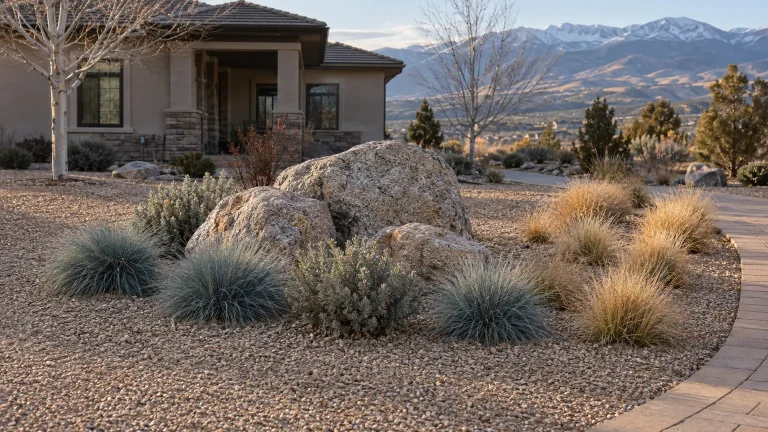
A complete backyard landscape in Reno, NV, built from a blank slate on a new home, usually lands between $60,000 and $200,000. That is the range most of Rock Solid Landscape’s full-yard projects fall into, and the reason it is so wide is that the yard itself, not the wish list, sets most of the price. Two houses on the same street can need very different amounts of drainage, excavation and base work before anything you would photograph goes in.
This guide explains where that money goes, using our own 2026 numbers as the worked example. It is written for the homeowner who is about to call three landscape companies and wants the quotes to make sense when they come back. Owner Jeff Steckline would rather be your last call than your first, and this is most of what he would tell you on that call.
Why do two Reno landscape quotes for the same yard come back so far apart?
Because they are rarely quoting the same job. One contractor is pricing a foot of excavation, geotextile fabric over the clay and a compacted base under the driveway. Another is pricing four inches of base and hoping. One is trenching roof drainage out to the street. Another is leaving it for you to discover the first March. On a $100,000 project, those choices can move the number by tens of thousands of dollars and never show up in the drawing.
The other reason is how the proposal is written. A lump sum hides all of this. An itemized proposal exposes it. We itemize everything, from the roll of fabric to the labor, on purpose: so you can take a line like “20 yards of 2-inch river rock” and call the rock yard yourself to check it. If a quote you are holding cannot be checked that way, ask for one that can before you compare prices.
What does drainage add to a backyard budget in Reno, and why is it not optional?
Much of the Reno-Sparks valley sits on clay. University of Nevada, Reno Extension’s fact sheet on soil considerations for Northern Nevada (FS-09-23) puts it plainly: infiltration into clay-rich soils is limited by the small pore spaces between clay grains, and some clay soils swell when wetted, reducing pore space further. In practice, water that lands on a roof and drops into a clay backyard stays there.
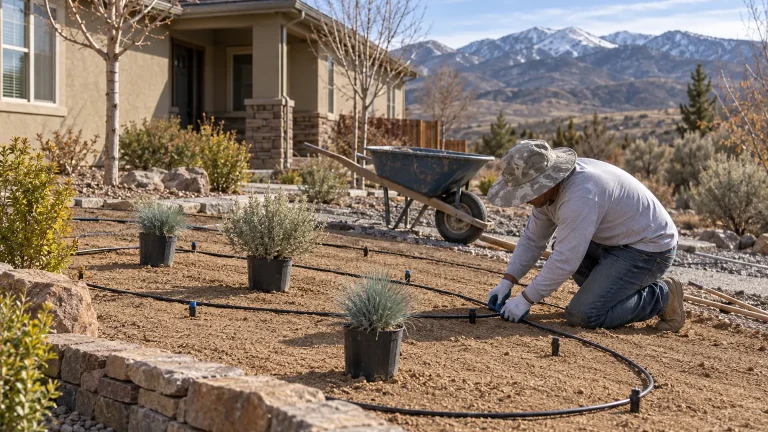
So before a fire pit or a water feature is discussed, we get that water off the roof, down the gutters, into a pipe and out to the street. On a typical lot that is a couple of thousand dollars in labor alone, just to run the trenches. Jeff explains it to every client the same way: it is not the exciting part, but a backyard that puddles for a week after every storm is not usable, and it hurts resale more than any feature adds to it.
If a proposal you are comparing has no drainage line at all, that is the first question to ask.
How much of the price is labor?
More than most people expect, and it has moved. In Reno in 2026, a crew member with no experience cannot be hired for less than about $22 an hour, and anyone with experience, good or not, is at $25 or more. On top of that, we pay every crew an extra hour at the end of each day to clean the site, because Nevada’s late-afternoon wind will otherwise push base and sand into the neighbor’s yard. That hour is on every proposal we write, every day of the job.
Then there is what it costs to run a company above board. Our workers’ compensation insurance alone runs about $17,000 a year. Add general liability, the contractor’s bond, licensing and payroll taxes, and a meaningful share of every dollar you spend goes to making sure the people in your backyard are covered if something happens. The cheapest quote in a stack often gets there by skipping some of that, and it is worth asking directly who carries the risk if a crew member is hurt on your property.
Why have material prices gone up so much?
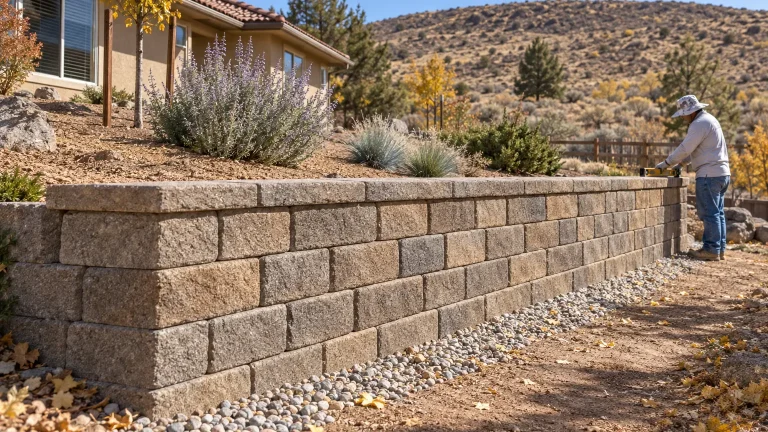
Pavers cost roughly 40 percent more than they did five years ago. A pallet of wall block that was about $500 is now about $700. Those are our costs, not markups, and they are the single biggest reason homeowners who last landscaped a house twenty years ago get sticker shock today. If that is you, know that nobody is trying to take advantage of you. The market moved.
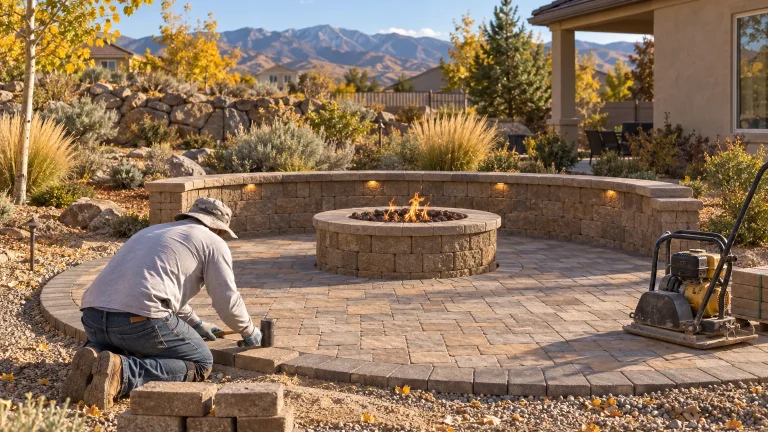
Material choices still matter within that market. A textured concrete block can give you most of the look of natural stone for less. Belgard pavers cost more than a bargain product, but they are what our certified installers are trained on and what our warranty is written against. And there are materials we will not sell you at any price, like a mortared faux-rock veneer on a wall or water feature that stays wet through winter, because freeze-thaw will pop the pieces off one at a time.
What is under the pavers, and why does it change the price?
A patio or driveway in Reno fails from underneath, not on top. The Interlocking Concrete Pavement Institute’s Tech Spec 2 (revised February 2017) sets the baseline: patios and pedestrian areas need at least 4 inches of compacted base on well-drained soil, residential driveways need at least 6 inches, and in colder climates or on continually wet or weak soils, bases need to be 2 to 4 inches thicker still. It also notes that geotextile fabric is used where there is freeze-thaw or over clay and moist silty subgrades, to keep the soil from migrating up into the base under load.
Reno is cold, has freeze-thaw, and has clay. That is why our driveways start with about a foot of excavation and fabric over the clay, and it is why a properly built patio costs more per square foot than the number on a paver box suggests. Excavation, hauling spoils, fabric, base rock delivered and compacted in lifts, bedding sand, edge restraint, then pavers, then jointing sand. Every one of those is a line on our proposal.
One more honest note: polymeric jointing sand can develop small cracks over time with Nevada’s heating and cooling. That is normal and not a failing patio. On our jobs we come back and redo the joints. Ask any contractor what their answer is when that happens, and whether it is covered.
How do you read a landscape proposal so you can compare them?
- Is it itemized? If you cannot see the roll of fabric, the yards of base rock, the linear feet of drain pipe and the labor separately, you cannot compare it to anything.
- Is there a drainage line? Roof water to the street, and grading away from the house and garage.
- What is the base depth, and is there fabric? The numbers above are the floor, not the ceiling.
- What is warrantied, and for how long? Ours is three years on all hardscape against settling, one year on irrigation and landscape installation, and 90 days on plant material. One year on pavers is common in town. Ask.
- Who will be on site? A foreman every day, and how often the owner shows up. Our foreman has been with Jeff for 22 years, and Jeff is on the job two to four days a week.
- What is an allowance? Plants, lighting fixtures and appliances are often allowances. Know which lines can grow.
For what to ask before you sign, we wrote a separate guide on choosing a landscape contractor in Reno. This article is about the money. That one is about the people.
How long does a complete backyard take?
A full yard on a new build keeps our crew on site for about a month. The order matters: drainage and rough grading, irrigation main lines and sleeves, hardscape, then trees and plants placed by the aspect of the house so they shade the patio in ten years rather than the fence, then artificial turf, lighting and topdressing last. Renovations take longer and cost more, because everything comes out before anything goes in. Jeff will tell you that on the first visit rather than let it surprise you in the proposal.
How can you keep the number down without cutting corners?
Phase it, and decide what is worth paying for now. A recent example: a new-build client wanted color against a long retaining wall behind the house, and the excavation turned up three feet of concrete overpour from the wall footing. A raised planter along the full 65 feet would have added about $9,000. Instead of arguing, Jeff painted out a 25-foot raised bed in front of the bedroom window, where they would actually see it, extended the turf to the wall on the rest, and walked them through it on FaceTime so they did not have to drive down from Lake Tahoe. Same result where it counted, at a fraction of the cost.
What you should not trim is the part you cannot see. Drainage, excavation depth, fabric and base are where a quote gets cheap, and they are exactly the things that cost the most to fix later because the patio has to come up to get to them.
Frequently asked questions
Will Rock Solid give me a price over the phone?
Not for a yard. Access, grade, soil and materials change the number too much to guess from a description. If all you need is what artificial turf runs per square foot, Jeff will give you that on the call. For anything else he meets you at the property.
Is a small project worth calling about?
Sometimes. We keep a two-man crew for smaller hardscape jobs, like tearing out a concrete driveway and setting pavers. A two- or three-day job that needs the trailer, equipment and a portable toilet moved is hard for a company our size to do well or profitably, and we will say so. Small tear-out and rock projects are worth asking about in winter.
Does a renovation cost more than landscaping a new build?
Usually, yes. Everything that is there has to be removed and hauled before the new work starts, and old yards hide surprises like irrigation running under a driveway. New builds are the ideal case for us because the site is a blank slate.
What does the warranty cover?
Three years on all hardscape against settling, one year on irrigation systems and landscape installation, and 90 days on plant material. If a plant struggles after that, call. We would rather come look than argue about it.
Does an itemized proposal cost more?
No. It just shows you what you are paying for. We itemize so you can check our numbers against the rock yard and the paver supplier yourself.
The figures in this article are Rock Solid Landscape’s own 2026 costs and typical project ranges in Reno, Sparks and Carson City, NV. They are not a quote. Base thickness figures are from ICPI Tech Spec 2, Construction of Interlocking Concrete Pavements (revised February 2017). Soil statements are from University of Nevada, Reno Extension, Low Impact Development in Northern Nevada: Soil Considerations, FS-09-23 (Donaldson and Hefner, 2009).
Ready to see what your yard actually needs? Read about our complete landscape design and build process in Reno, or call (775) 618-0621 to set up an in-person visit with Jeff. If your project is mostly hardscape, our paver driveway construction method and paver patio base preparation pages show exactly what you are paying for underneath.