
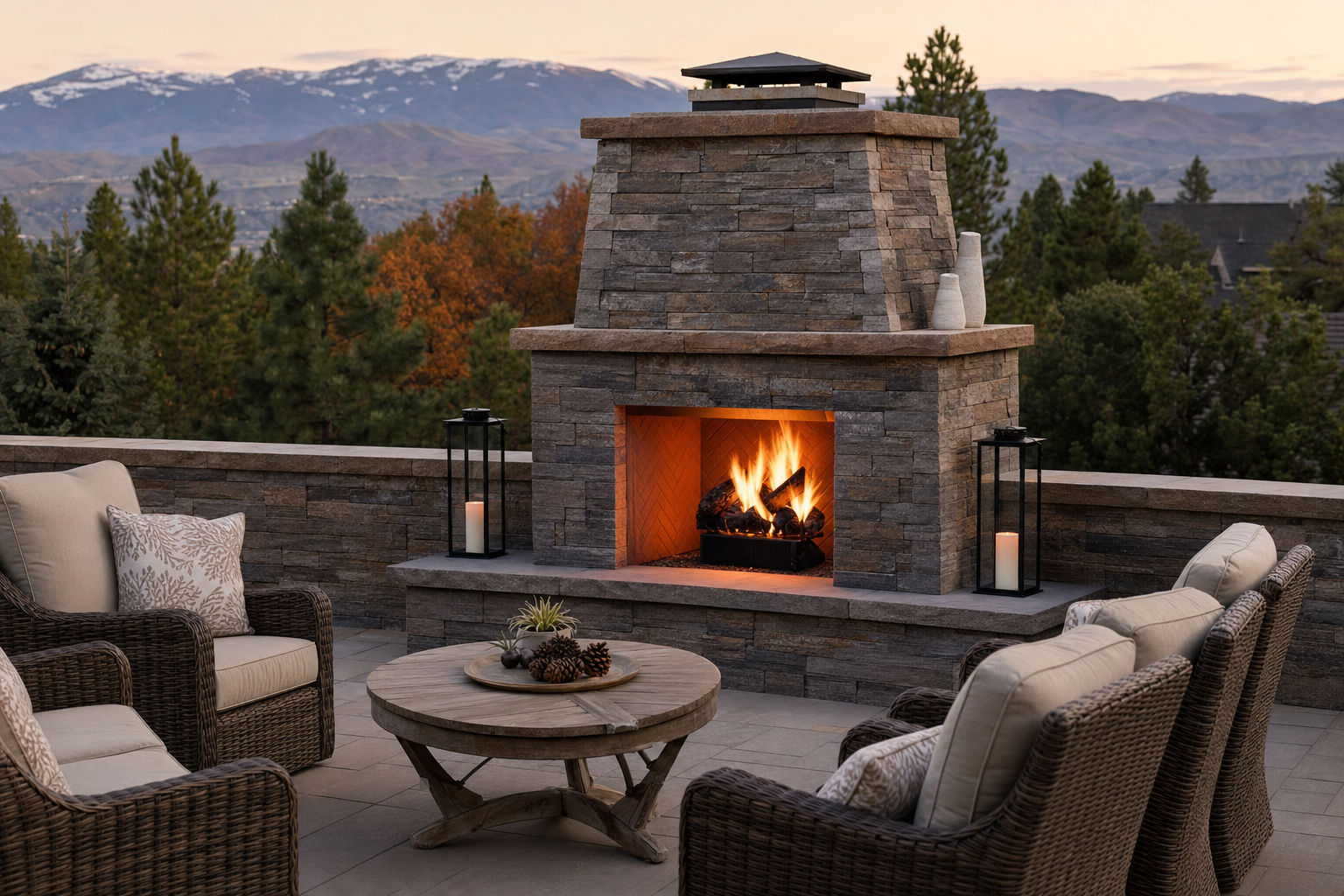
Outdoor Fireplace Installation Sparks, NV: What the Build Actually Involves
Reno, NV and Sparks share the same high desert climate, and that climate has real consequences for how we build. Our outdoor kitchen guide for Carson City spends a lot of time on layout planning and appliance integration, because that project is fundamentally about function. An outdoor fireplace is a different kind of build. It is a structural focal point, and the decisions that shape it happen much earlier in the process, before a single block is set. For homeowners in Sparks who are thinking about adding one this fall, understanding the structural and site-specific side of the project is where we always start. Outdoor fireplace installation Sparks, NV is not a plug-and-play addition. It requires permits, a prepared surface, and material choices that hold up to the freeze-thaw cycles this region delivers every winter. Washoe County enforces specific setback and clearance rules that affect how and where a fireplace can be placed on your property.
Outdoor fireplace installation in Sparks, NV typically takes one to three weeks from site prep through final inspection, depending on the structure’s size, the fuel type, and whether a new patio surface or surrounding hardscape is part of the scope. The project requires a building permit, a proper footing or base, and materials rated for the temperature swings common to the Truckee Meadows area.
Key Takeaways
- Outdoor fireplace installation in Sparks, NV requires a building permit and a structural footing, not just a surface-level install.
- Sparks sits at roughly 4,400 feet elevation, and material choices need to account for freeze-thaw cycling that can crack unsuitable masonry over time.
- Gas and wood-burning fireplaces follow different permitting and clearance requirements in Washoe County.
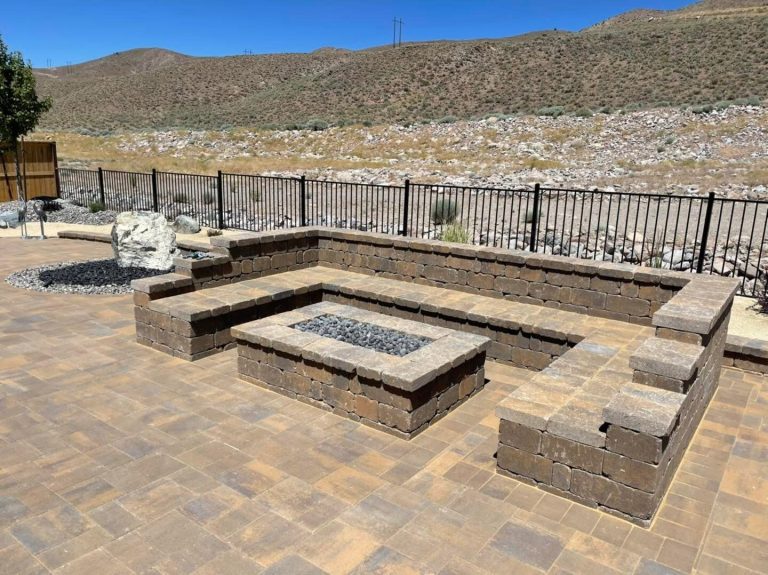
- The fireplace build is often paired with a paver patio or outdoor kitchen to create a complete outdoor living space.
- August is a practical time to start the process so the structure is ready before fall temperatures drop in the evenings.
What Outdoor Fireplace Installation Sparks, NV Actually Involves
The build starts with the footing. An outdoor fireplace is a heavy masonry structure, and without a properly poured concrete footing below the frost line, the structure will shift and crack as the ground moves through seasonal freeze-thaw cycles. In Sparks, that frost depth matters. We excavate, form, and pour the footing before any visible structure goes up. This phase alone takes a day or two depending on soil conditions and how much prep work the site requires.
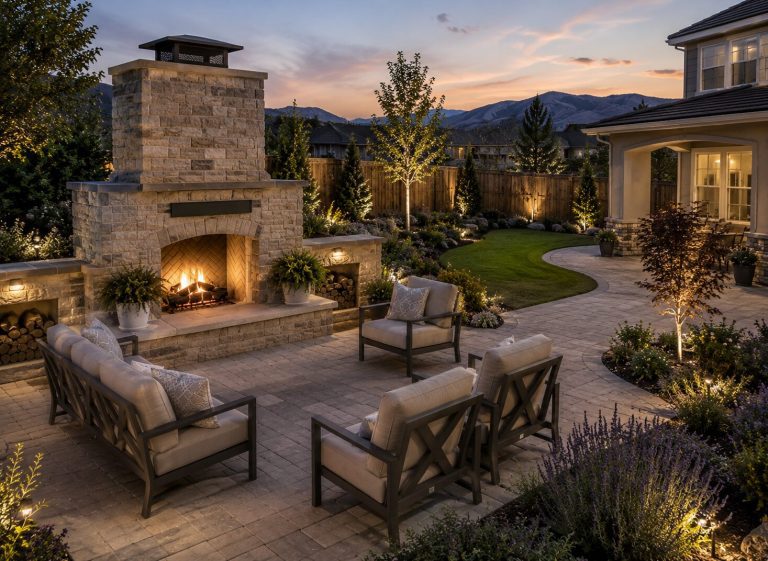
Once the footing cures, framing and block work begin. We typically build the firebox and surrounding structure using concrete masonry units or a steel-framed assembly with a non-combustible veneer, depending on the design. The firebox itself is lined with refractory firebrick, which is rated to handle the direct heat of a fire without spalling or cracking. The surround and facing can be finished with a range of materials, including natural stone, manufactured stone veneer, or stucco, each of which has different maintenance profiles over time in a high desert climate.
Chimney height and clearance requirements are not optional design choices. They are code-driven. Washoe County has specific setback and clearance rules for outdoor fireplaces, and the chimney must extend high enough to keep smoke away from the structure and any adjacent roofline. For gas fireplaces, a licensed gas line connection is part of the scope, and that work requires its own inspection. We coordinate all of this so the homeowner is not managing separate contractors or permit tracks on their own. You can see more about what we build on our outdoor fireplaces service page.
How Does the High Desert Climate in Sparks Affect Material Choices?
Sparks sits at roughly 4,400 feet elevation in the Truckee Meadows basin, east of Reno along I-80. The temperature swings here are significant. Summer days in August regularly reach into the mid-90s, and winter nights can drop well below freezing. That range, repeated across years, is hard on materials that were not selected with it in mind.
Natural stone is a strong performer in this climate, but not all stone is equal. Porous stone that absorbs water and then freezes will spall and crack over time. We select stone and mortar mixes that are rated for freeze-thaw exposure. Manufactured stone veneers are another option, and the quality range is wide. We use products that carry appropriate freeze-thaw ratings for this elevation, not products that perform adequately in a milder coastal climate but will deteriorate here within a few seasons.
The mortar joints are also a factor. Improper mortar mix or joints that are not tooled and sealed correctly will allow water infiltration, and that water expands when it freezes. We have seen fireplaces built by others in the area that showed visible cracking within two or three winters because the mortar spec was not right for this region. Getting the material stack correct from the start is the difference between a structure that holds up and one that needs repair.
If the fireplace is being added to an existing patio, we also evaluate whether that surface can handle the added load. A paver patio built on a properly compacted base typically handles this well, but we always assess before we build on top of existing work.
What Does the Project Timeline Look Like From Start to Finish?
The permitting phase is usually the first variable in the timeline. Washoe County permit processing times fluctuate, and we factor that into the project schedule from the beginning. We submit plans and handle the permit application on our end so that phase does not stall the project unnecessarily.
Once permits are approved, outdoor fireplace installation Sparks, NV moves through footing, block work, veneer, and finishing in roughly one to two weeks of active construction, depending on scope. If the fireplace is part of a larger outdoor living project that includes an outdoor kitchen, outdoor lighting, or a new paver surface, the overall timeline extends accordingly, but we sequence the trades so each phase feeds into the next without unnecessary delays.
Final inspection happens after the gas line connection (for gas units) or after the chimney cap and spark arrestor are installed (for wood-burning units). The project is not complete until it passes inspection, and we do not hand off a finished product that has not been signed off.
For homeowners who want to see the design before committing, we offer 3D design renderings that show how the fireplace will look within the full outdoor space. This is especially useful when the fireplace is being integrated with other elements like steps, seating walls, or a fire pit area. Our Reno outdoor fireplace article covers some of the design considerations in more depth if you want to dig into that side of the decision.
Frequently Asked Questions
Do I need a permit for an outdoor fireplace in Sparks, NV?
Yes. Outdoor fireplaces in Sparks fall under Washoe County building permit requirements because they are permanent masonry structures. Gas-fueled units also require a separate mechanical or gas permit and inspection. We handle the permit application as part of the project so homeowners are not navigating that process alone.
What is the difference between an outdoor fireplace and a fire pit for a Sparks property?
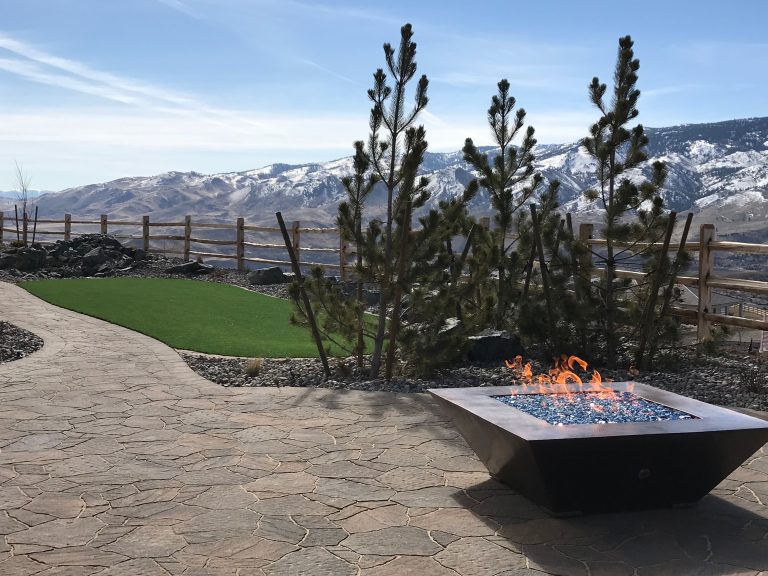
An outdoor fireplace is an enclosed, chimneyed masonry structure that directs smoke upward and creates a more defined focal point. A fire pit is typically open on all sides and creates a more social, 360-degree gathering layout. The right choice depends on the yard size, wind patterns on the property, and how the space will be used. Both require permits in Washoe County.
Can an outdoor fireplace be added to an existing patio in Sparks?
In many cases, yes, but it depends on what the existing surface is built on. Outdoor fireplace installation Sparks, NV on an existing patio requires a dedicated footing below the frost line, which means digging below the existing patio surface in that area. We assess the existing conditions before committing to a plan so there are no surprises mid-project.
How does the Sparks climate affect how long an outdoor fireplace lasts?
The freeze-thaw cycling at Sparks’s elevation is the primary durability factor. A fireplace built with properly rated materials, correct mortar mixes, and a sealed finish will hold up for decades. One built with materials spec’d for a milder climate may show cracking or spalling within a few winters. Material selection is not an aesthetic-only decision here.