
How Fall Fire Pit Installation Extends Your Outdoor Living Season
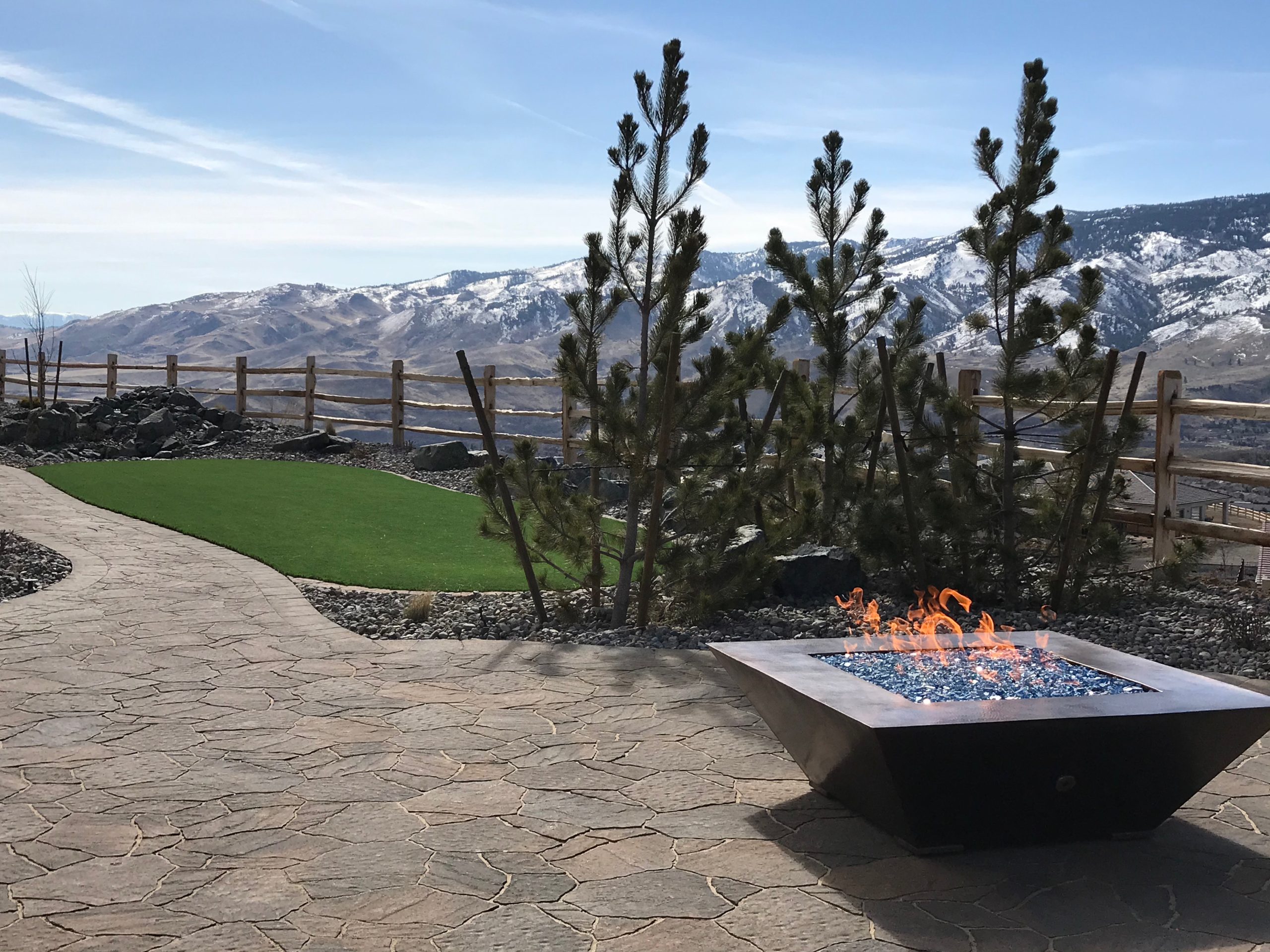
Evening temperatures drop fast in the Reno and Sparks areas once fall arrives. By late September, those comfortable 80-degree afternoons give way to crisp 40-degree evenings that send most people indoors. But homeowners with fire pits tell a different story. They’re outside with blankets and hot drinks, enjoying the most beautiful season Northern Nevada offers while everyone else watches through windows.
Installing a fire pit during fall might seem counterintuitive, but it’s actually the smartest time for this popular hardscape addition. The weather cooperates, contractors have availability, and you can start using your investment immediately instead of waiting months for spring installation. If you’ve been thinking about adding a fire feature to your paver patio or outdoor living space, October through early November offers the perfect window.
Why Fall Timing Works for Fire Pit Projects
The logistics of fire pit installation align perfectly with Northern Nevada’s autumn conditions. Understanding these advantages helps explain why experienced homeowners plan these projects now rather than waiting.
- Ideal construction weather: Moderate daytime temperatures in the 60s and 70s allow crews to work comfortably and efficiently without extreme heat or cold affecting productivity
- Proper material curing: Lower humidity helps mortar and concrete cure correctly without excessive drying or moisture complications
- Stable weather patterns: You avoid summer thunderstorms that delay outdoor construction and work before winter freeze makes excavation difficult
- Better contractor availability: Landscape professionals experience lighter scheduling after the spring rush, giving your project focused attention
- More design flexibility: With fewer competing projects, you get more time for consultations and customization discussions
- Immediate enjoyment: Your fire pit is ready for holiday gatherings and you can test performance before peak usage season
Understanding Your Fire Pit Fuel Options
Fire pits come in more varieties than most homeowners realize, and choosing the right style affects both your initial investment and long-term satisfaction. The decision starts with fuel source, which shapes everything from installation complexity to daily use patterns.
Wood-Burning Fire Pits deliver authentic campfire ambiance with crackling logs and unmistakable scent. They work best in larger yards where smoke dispersal doesn’t concern neighbors. These require regular maintenance including ash removal and cleaning, but many homeowners prefer the sensory experience despite extra effort. No utility connections mean simpler installation, though you’ll need proper clearances and fire-safe materials.
Natural Gas Fire Pits provide instant ignition, adjustable flames, and zero cleanup. They require professional installation to run gas lines safely and meet code requirements. The convenience factor makes them popular for homeowners who want effortless entertaining. Once installed, you simply turn a key or flip a switch for instant warmth.
Propane Fire Pits deliver the same convenience as natural gas but use refillable tanks instead of permanent lines. This flexibility makes placement easier and installation less complex. You’ll monitor fuel levels and swap tanks periodically, but the trade-off is simpler setup without trenching for gas lines.
The Professional Installation Process
Professional fire pit installation involves more complexity than most homeowners anticipate. This isn’t a weekend DIY project if you want lasting results that meet safety codes and function properly for years.
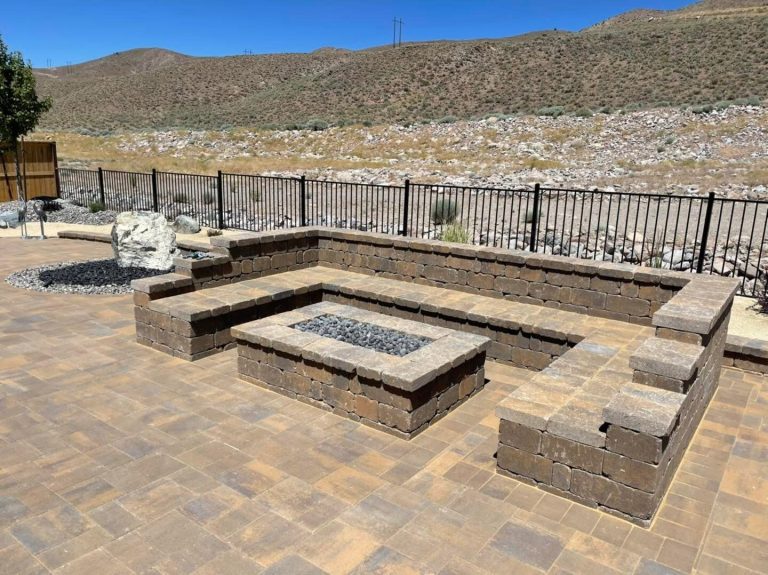
The process begins with site evaluation and design. Your landscape professional assesses the proposed location for proper clearances from structures, overhanging trees, and property lines. Local codes typically require specific distances from buildings and combustible materials. The design phase also determines size, materials, seating arrangements, and how the fire pit connects with existing hardscape like your paver patio or outdoor kitchen.
Excavation and base preparation create the foundation for long-term stability. Crews dig out the installation area and establish a compacted gravel base. This step proves critical in Northern Nevada’s soil conditions, where proper drainage and frost protection prevent settling and cracking over time. For gas or propane installations, trenching accommodates fuel lines with appropriate depth and protection.
Material installation brings your design to life through skilled masonry work. Whether you’re building with natural stone, manufactured block, or matching materials to existing retaining walls, proper construction techniques ensure durability. Fire-rated materials matter here, as standard pavers or stones can crack or explode when exposed to high heat. For gas installations, licensed professionals handle all connections, pressure testing, and safety inspections.
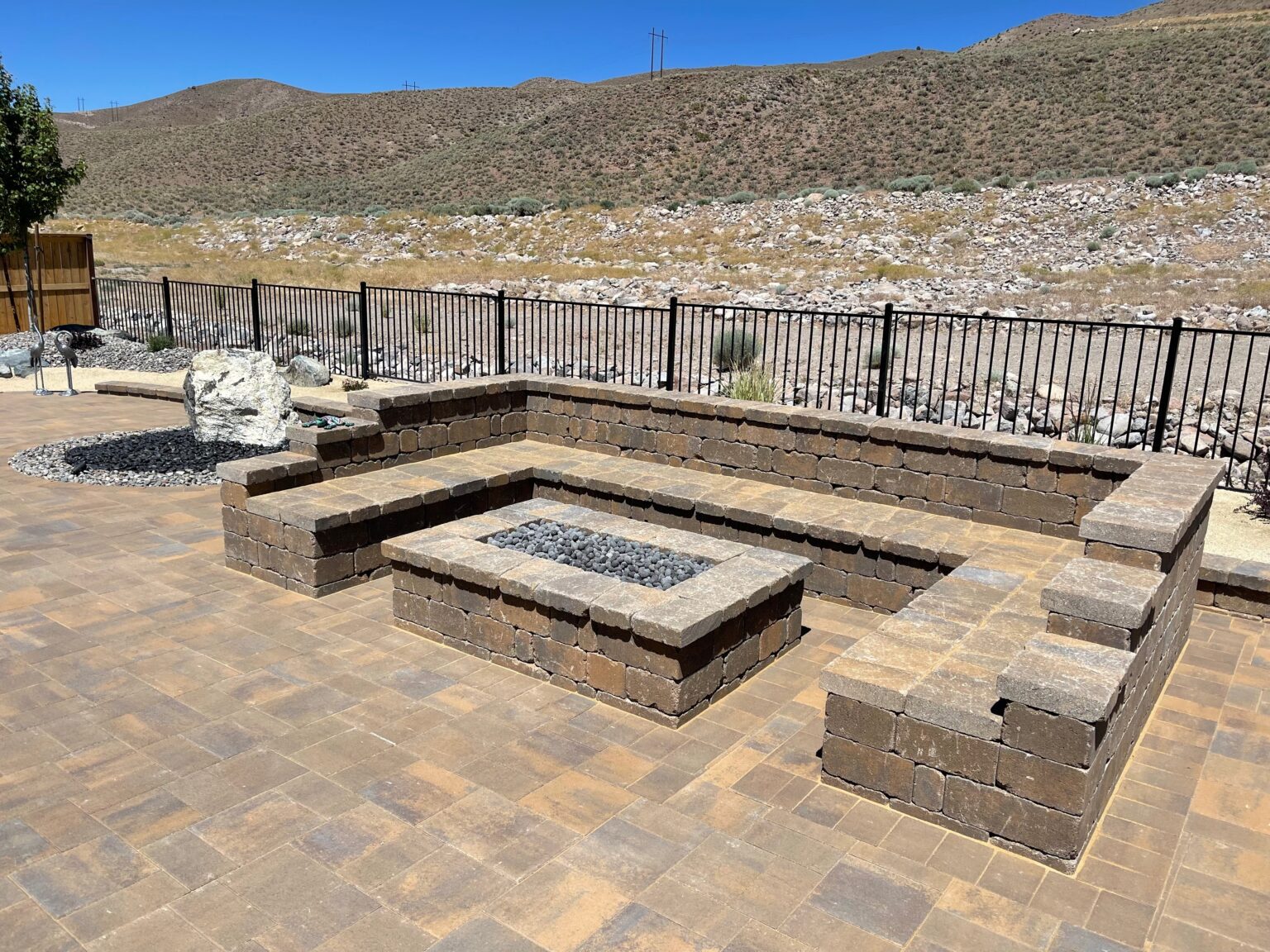
Common Fire Pit Design Mistakes
Smart homeowners learn from others’ experiences rather than making expensive corrections after installation. Several common oversights can diminish fire pit enjoyment or create functional problems down the road.
- Scale and proportion issues: A fire pit that seems reasonable on paper can overwhelm a small patio or disappear in a large outdoor space, so professional designers help you select dimensions that balance with surrounding elements
- Ignoring wind patterns: Wind behavior around your property affects smoke direction and flame performance, and experienced installers account for prevailing winds and building placement to prevent smoke constantly blowing into seating areas
- Poor integration planning: If you’re considering outdoor lighting, an outdoor kitchen, or additional paver work, coordinate these projects together since running gas lines and electrical conduit works best as unified design
- Inadequate seating planning: Built-in seating walls offer convenience but lack flexibility, while movable furniture allows arrangement changes but requires storage, so many homeowners find a combination approach works best
Investment and Value Considerations
Budget questions always arise with hardscape projects, and fire pit costs vary significantly based on complexity, materials, and fuel source. Simple prefabricated fire pit bowls with basic paver surrounds start in the lower range, while custom stone structures with gas lines, integrated seating, and decorative elements represent substantial investments.
Several factors drive these cost differences. Material selection plays a major role, as natural stone costs more than manufactured block but delivers distinctive character. Fuel source affects pricing, with gas line installation adding to the budget compared to wood-burning options. Size and complexity multiply labor hours, and custom design work costs more than template solutions. If you’re planning a comprehensive outdoor renovation, exploring professional landscape design and rendering services helps you visualize the complete project and understand true costs upfront.
The return on investment extends beyond dollars. Fire pits consistently rank among the top outdoor features for homeowner satisfaction and property value. They extend your living space usage by months each year and create gathering spots that friends and family remember.
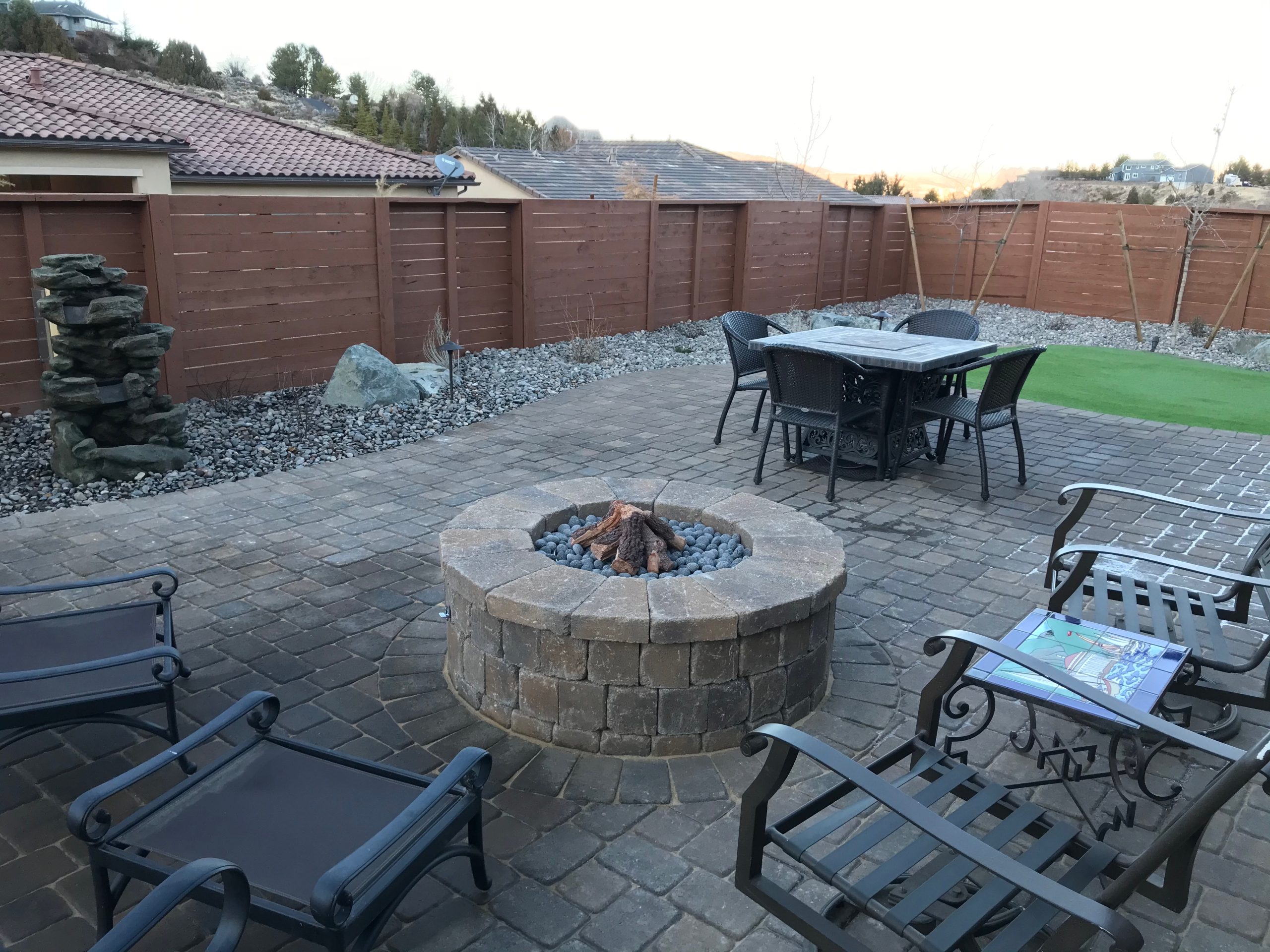
Get Started with Your Fall Fire Pit Project
The window for comfortable fall installation closes quickly as Northern Nevada moves toward winter. If you’re serious about enjoying a fire pit this season and for years to come, now is the time to move from consideration to action.
Rock Solid Landscape has been designing and building custom fire pits throughout the Reno, Sparks, Carson City, and Incline Village areas since 2004. Our approach combines technical expertise with the design sensitivity your property deserves. We handle everything from initial concepts and permits through final installation and testing, ensuring your fire feature integrates beautifully with existing hardscape and meets all safety requirements.
Whether you envision a simple gathering spot or an elaborate outdoor living area with a fire pit as the centerpiece, our team provides the guidance and craftsmanship that turns ideas into reality. Call us at 775-618-0621 to discuss your project and discover why over two decades of Northern Nevada homeowners have trusted Rock Solid Landscape with their outdoor investments.
Fall evenings are too beautiful to spend indoors. Let’s create the fire pit that keeps you outside enjoying them.
Why is fall the best time to install a fire pit in Northern Nevada?
Fall offers ideal construction conditions with moderate 60–70°F temperatures, better contractor availability after the spring rush, and immediate enjoyment for holiday gatherings. The ground remains workable before winter freeze, mortar cures properly in lower humidity, and you avoid summer thunderstorms. Installing in October means your fire pit is ready to extend your outdoor season immediately rather than waiting until spring.
How much does professional fire pit installation cost?
Fire pit installation costs vary significantly based on size, materials, fuel source, and design complexity. Simple prefabricated bowls with basic paver surrounds represent more affordable options, while custom stone structures with gas lines, integrated seating walls, and decorative elements require larger investments. Material choice affects pricing, as natural stone costs more than manufactured block. Gas line installation adds to budgets compared to wood-burning options. Professional landscape design and rendering services help you visualize the complete project and understand costs upfront.
Can fire pits increase my property value?
Yes. Fire pits consistently rank among the top outdoor features for homeowner satisfaction and property value. They extend your living space usage by months each year, create memorable gathering spots for family and friends, and demonstrate quality outdoor improvements to potential buyers. When integrated professionally with existing paver patios and hardscaping, fire features become focal points that enhance overall landscape appeal and functionality.