
Artificial Grass in Reno: What It Actually Costs and Why It Makes Sense Here
If you have ever dug into the soil in a typical Reno, NV backyard, you know what you are dealing with: a pale, sandy-alkaline mix that drains fast, compacts under foot traffic, and fights grass at almost every turn. Getting natural lawn to establish in that kind of ground takes real effort, consistent irrigation, and a fair amount of luck with the timing of late frosts. It is one of the main reasons so many homeowners here start looking into artificial grass Reno as a practical alternative rather than just an aesthetic one. The ground itself is part of the argument.
What Artificial Grass Reno Actually Costs, and How to Think About It
The most common question we get is straightforward: what does this cost? For most residential projects in the Reno area, artificial turf installation runs somewhere between $12 and $20 per square foot installed, depending on the turf grade, the complexity of the area being covered, and what the base preparation requires. A 500-square-foot backyard conversion typically falls in the $6,000 to $10,000 range. Larger projects with multiple zones, drainage considerations, or integration with hardscape features like paver patios or retaining walls will land toward the higher end.
That number can feel significant up front. But the comparison that matters is not turf versus sod at installation. It is turf versus sod over five to ten years. Natural grass in the high desert requires regular overseeding, fertilization, weed control, and irrigation. Reno’s water rates have climbed steadily, and a typical irrigated lawn uses somewhere between 50 and 75 gallons per square foot annually. Multiply that across a 1,000-square-foot lawn and the water cost alone adds up fast, before you factor in the labor and product costs of keeping the lawn looking presentable. Artificial turf eliminates most of that recurring spend. Most installations pay for themselves within four to six years when you account honestly for what natural grass actually costs to maintain here.
Why High Desert Conditions Shape the Case for Artificial Grass
Reno sits at roughly 4,500 feet in elevation, which means UV exposure is more intense than it would be at lower elevations. Cheaper turf products fade and degrade faster here than they might in coastal markets. This is something worth pressing your installer on. The turf we use is UV-stabilized and rated for high-altitude sun exposure, which matters for longevity. A product that looks fine in a showroom in a lower-elevation climate may show color shift and fiber breakdown within a few years in the Truckee Meadows.
The freeze-thaw cycle is another factor. Reno winters bring repeated cycles of overnight freezing and daytime thaw, which can heave and shift a poorly prepared base. The crushed aggregate base we install, typically compacted decomposed granite with a layer of finer material on top, is designed to flex slightly with temperature changes without compromising the surface above it. This is where shortcuts in base preparation show up years later as ripples or soft spots in the turf surface. We have seen it on properties in South Meadows and Damonte Ranch where previous installations used inadequate base depth.
Drainage is equally important. Reno does receive concentrated rainfall events, particularly in late spring and during the summer monsoon pattern. A properly installed artificial turf system drains at a rate that far exceeds natural grass, typically around 30 inches per hour, which prevents pooling and keeps the surface usable almost immediately after rain. That drainage performance depends on the perforated backing of the turf itself and on the base being graded correctly before installation begins. If turf is one piece of a larger project, our breakdown of where the money goes in a full Reno backyard build covers the drainage and base work under everything else too.
How Artificial Grass Compares to Natural Sod for Reno Properties
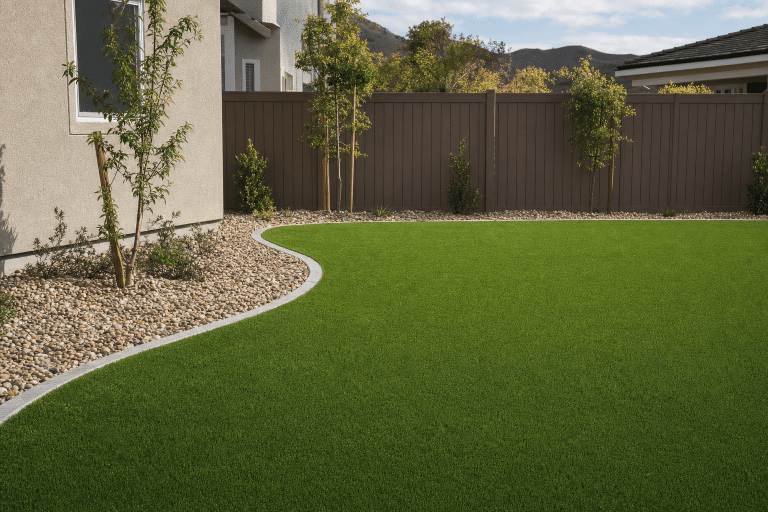
We work on properties where homeowners have tried both, and the honest comparison comes down to a few specific categories. Appearance is one area where turf has closed the gap significantly. The fiber technology in current-generation products is genuinely difficult to distinguish from bluegrass or fescue at a normal viewing distance, and the color stays consistent year-round without the dormancy browning that natural grass goes through in Reno winters.
Maintenance is where artificial grass Reno really separates itself. No mowing, no fertilizing, no reseeding after a rough winter. Occasional rinsing to clear dust and debris, and periodic brushing of the fibers if you have heavy foot traffic, are the main ongoing tasks. For households with dogs, there are turf products with antimicrobial infill and enhanced drainage backing that handle pet use well, though we always recommend discussing that use case specifically so we can match the right product to the application.
The one area where natural grass still holds a practical edge is surface temperature. Artificial turf does get hot in direct afternoon sun, especially in July and August. Shaded areas or yards with afternoon coverage from structures or trees are not a concern, but an open south-facing yard in full summer sun will have a turf surface that is noticeably warm underfoot during peak hours. It is a real consideration, not a dealbreaker, but worth factoring into how you plan the space. Pairing turf with outdoor lighting and shade structures can extend comfortable use into the evening when temperatures drop.
What to Expect When You Move Forward
For homeowners who have read through our earlier post on artificial grass installation in Reno, the process itself is already covered in detail. What we would add here is a note on timing. May is actually one of the better months to get artificial grass Reno projects scheduled. The ground is workable, temperatures are moderate enough for the adhesive and seaming materials to cure properly, and you get the full summer to enjoy the finished surface. Projects that get pushed to July or August are installed in heat that requires more careful handling of the materials and can extend the curing window.
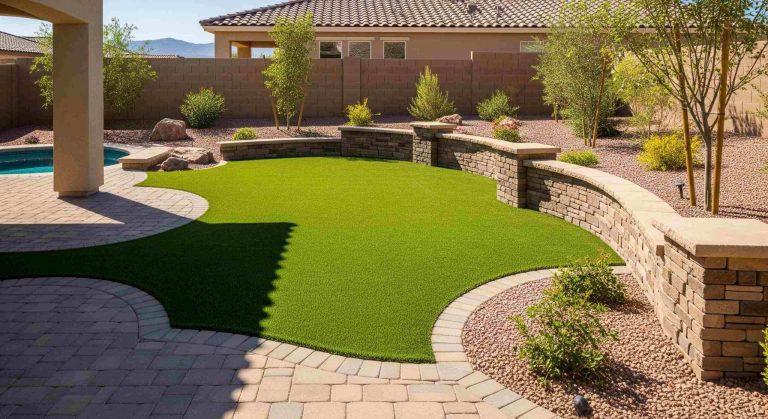
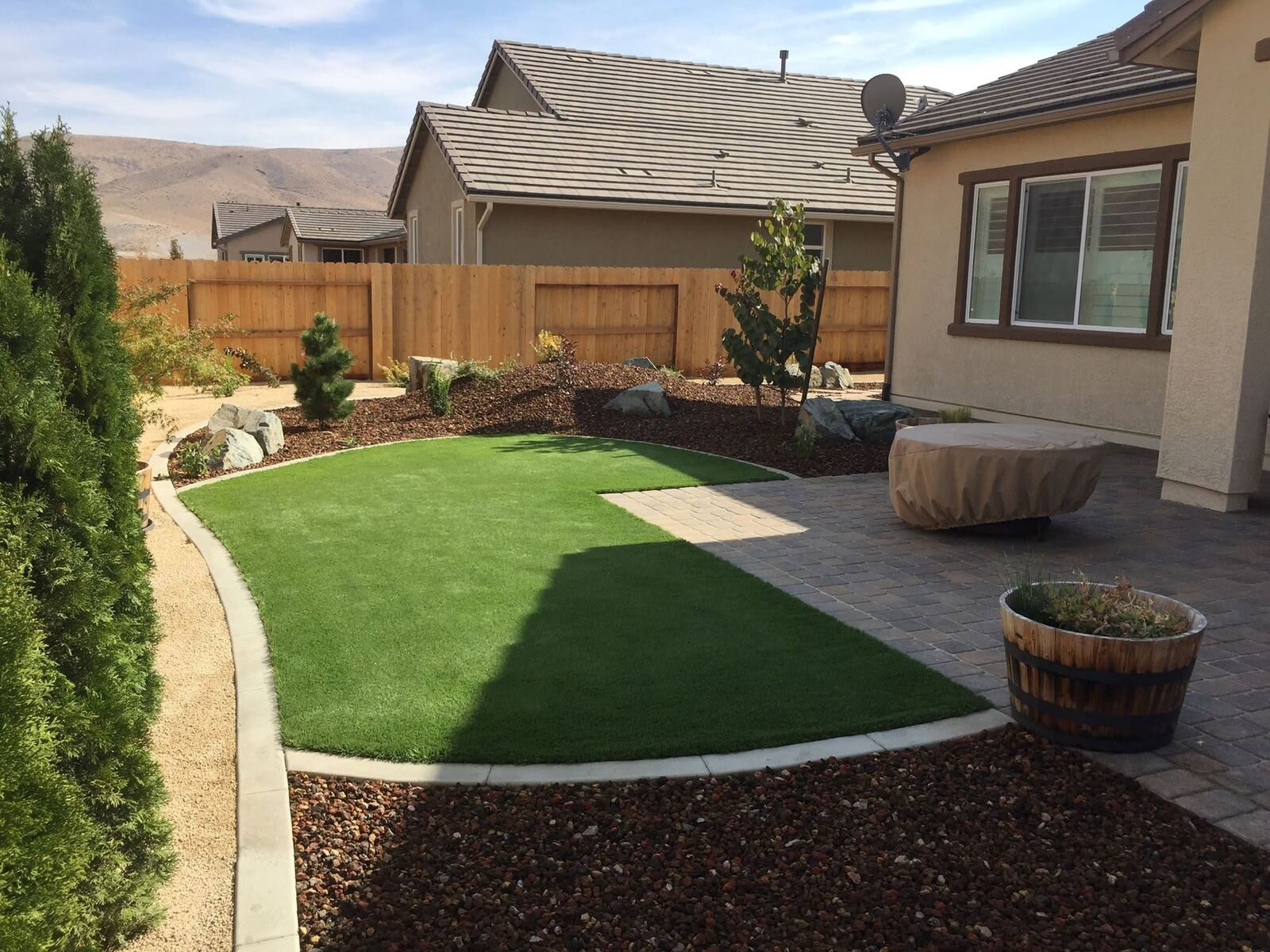
If you are integrating turf with other features, like a fire pit, a paver patio, or an outdoor kitchen, those hardscape elements typically go in first, with the turf laid up to and around them at the end. Getting the sequencing right at the planning stage avoids having to re-cut or refit turf edges later. Our design and rendering process helps map that out before any ground is broken, which is especially useful for complex yards with multiple features planned at once. You can learn more about the full range of what we do for Reno homeowners here.
The best artificial grass Reno installations are the ones where the base work is done right, the product is matched to the actual conditions of the yard, and the surrounding hardscape is planned as part of the same project rather than added on later. That sequencing is what separates a surface that holds up for fifteen years from one that starts showing problems in three.
FAQ: Artificial Grass in Reno
When should homeowners start planning this project?
Start planning before the problem is urgent. That gives the crew time to evaluate soil, drainage, access, materials, and scheduling instead of rushing the work.
What affects the final recommendation?
Property layout, grade, drainage, soil conditions, existing hardscapes, plantings, traffic patterns, and the owner’s long-term goals all shape the right approach.
Why hire a local professional?
A local team understands the climate, soil, permitting habits, material performance, and seasonal timing that can change how the work should be designed and installed.