
What Is the 3-5-7 Rule in Landscaping? A High Desert Guide
The 3-5-7 rule is a design guideline that says to group plants, boulders, and other features in odd numbers, usually 3, 5, or 7, instead of pairs or even rows. Odd groupings look natural and balanced, and they help a yard read as planned rather than scattered. It is a starting point, not a strict law.
What is the 3-5-7 rule in landscaping?
Designers use the phrase a few different ways, so it helps to know the common versions. The most widespread one is simple: when you repeat an element, use an odd number of it. Three shrubs, five boulders, seven ornamental grasses. Our eyes tend to read even numbers as a matching set, which looks stiff. Odd numbers create a small cluster with a natural center of attention.
A second version scales the count to the size of the space. A small bed might get a group of 3, a medium bed 5, and a long border or large front yard 7 or more. A third version applies it to variety: keep the number of different plant types low (3, 5, or 7 in a whole yard) and repeat them, so the design feels cohesive instead of like a plant sampler.
All three versions come back to the same idea. Repetition and odd groupings give the eye something to follow.
How do you apply odd-number grouping to plants, boulders, and hardscape?
Plants
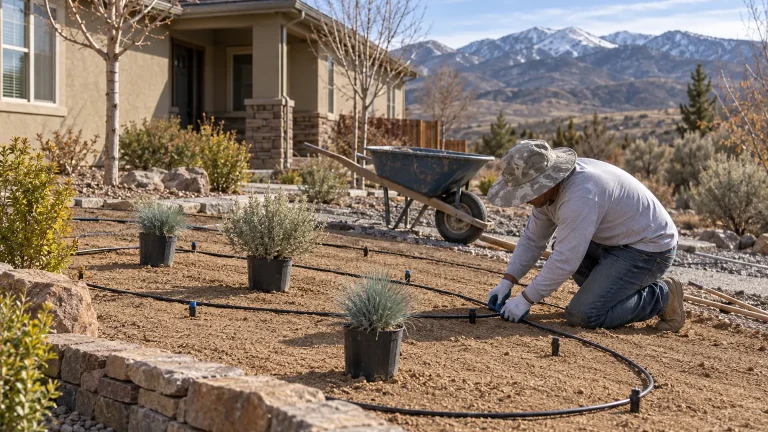
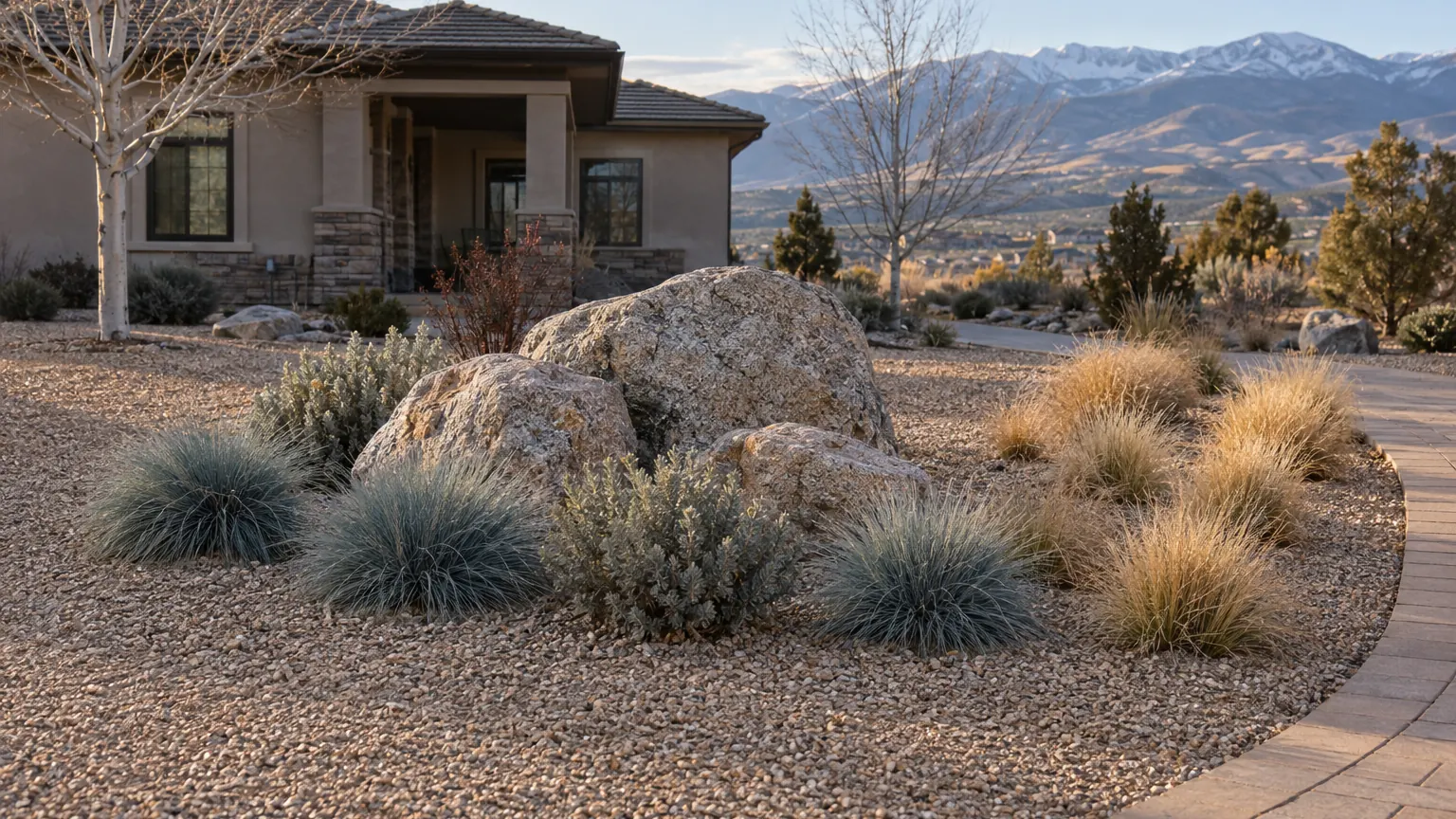
Plant in drifts, not lines. Three of the same shrub planted in a loose triangle looks better than three spaced evenly like fence posts. When you add a second and third plant type, repeat each one at least once elsewhere in the bed so the pattern carries across the yard.
Boulders
Boulders work best in groups of 3 or 5 with different sizes: one large, one medium, one small. Set them so they look like they surfaced from the ground, with the base buried. A common rule of thumb is to bury about a third of each stone. Boulders sitting on top of the soil like dropped marbles are one of the most common mistakes in rock landscaping.
Hardscape and features
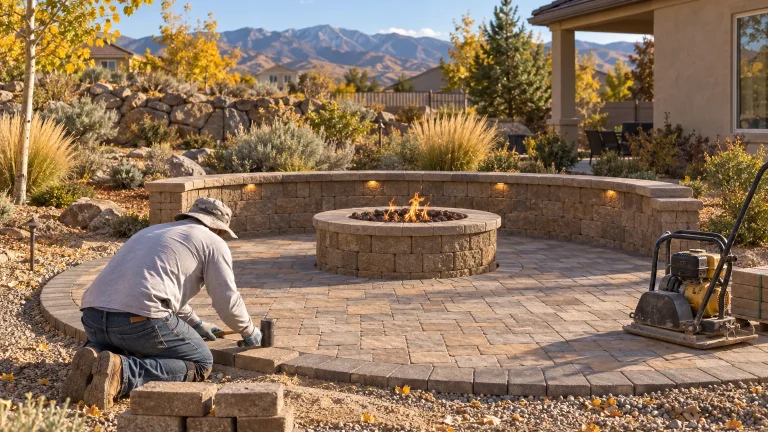
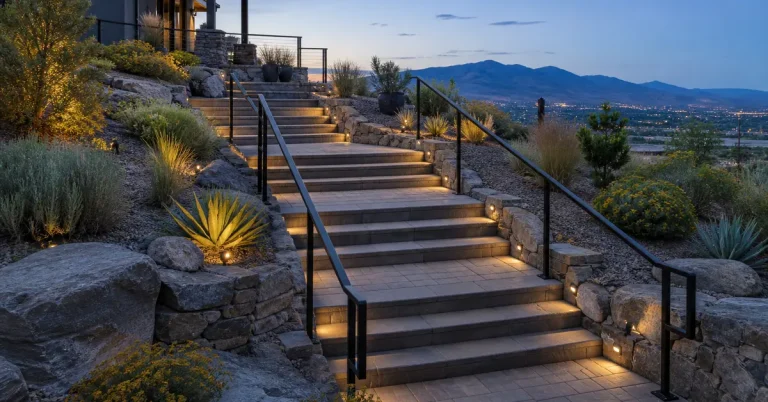
The idea also helps with things that are not plants. Three light fixtures aimed at a tree cluster, five steps in a stair run, or a set of three planters at an entry feel more natural than pairs. Still, steps, walls, and lighting have to follow safety, grade, and function first. Use odd grouping where you have a choice, and do not force it where the site or building code dictates the count.
Which high desert plants and rock elements work well with the 3-5-7 rule in Northern Nevada?
Reno and the surrounding area sit at roughly 4,500 feet, with hot dry summers, cold winters, strong sun, and wind. Plants have to handle all of that on limited water. Good candidates for repeating in groups of 3, 5, or 7 include:
- Ornamental grasses such as blue oat grass, which hold their shape and move in the wind.
- Russian sage, lavender, and penstemon for color and texture that tolerate dry conditions once established.
- Yarrow and sedum as low, repeating groundcover accents.
- Native shrubs such as rabbitbrush for a regional look.
Check each plant’s water needs and mature size before you count out a group. Seven plants that each grow four feet wide will not fit in a bed that looked roomy at planting time.
For rock, a mix of boulders, cobble, and decomposed granite pairs naturally with plant groupings. Keep one or two rock colors and sizes for consistency. Mixing five types of stone is the rock equivalent of planting one of everything at the nursery.
Does the 3-5-7 rule work for a small or sloped yard?
Yes, and it matters even more when space is tight. In a small yard, use groups of 3 and keep the plant palette short. Repeat the same two or three plants so the space feels bigger and calmer. Seven different single plants in a small bed can easily look busy, depending on their size, shape, and spacing, so repetition is usually the safer choice.
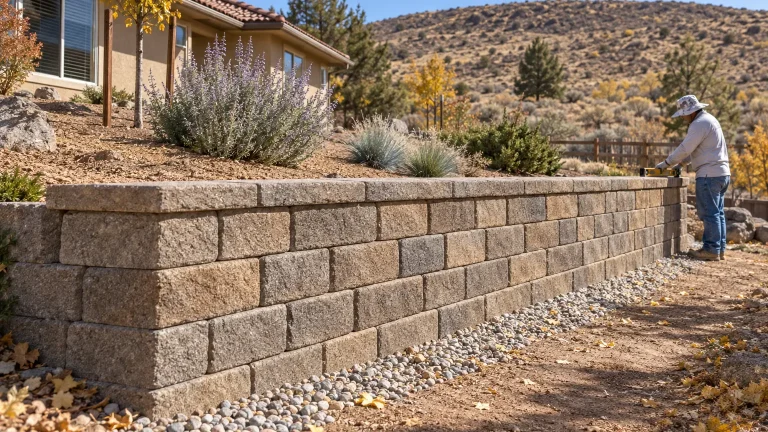
Slopes add a different job. On a grade, odd groupings can help plants look like they belong to the hillside instead of being pinned to it, and staggered clusters tend to look more natural than straight rows. Looks are only part of it, though. How a slope holds up depends on runoff, soil type, steepness, plant coverage, and how well roots establish. If soil is already moving, have the slope assessed by a professional before choosing a solution, which might involve drainage work, terracing, retaining walls, planting, or a combination.
Also think about sun exposure. South and west slopes in our area bake in summer and dry fast, while north-facing spots hold snow and stay cold longer. A grouping that thrives on one side of the house may struggle on the other.
When is a rule of thumb not enough and a full design worth it?
A rule of thumb helps you arrange a bed. It does not tell you where water will run in a storm, how a patio should connect to a walkway, how irrigation zones should be laid out, or whether a wall, steps, and lighting will work together. Once a project involves several of those pieces, a full design can help reduce rework.
Common signs you have outgrown the rule:
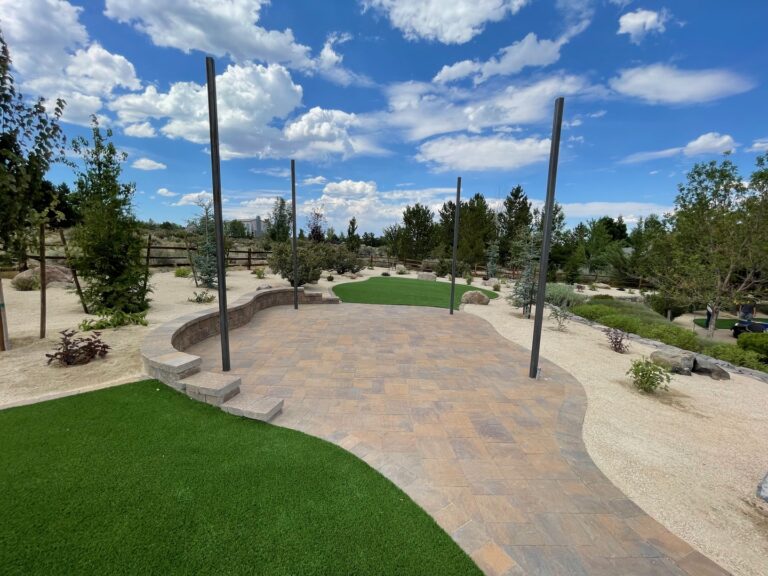
- The project includes hardscape such as a patio, walkway, retaining wall, or fire pit.
- The yard has grade changes, drainage problems, or limited access.
- You want irrigation, lighting, and planting to work as one system.
- You are doing the work in phases and need each phase to fit the whole.
- An HOA or city review may be involved. Requirements vary, so check with your HOA, city, or county.
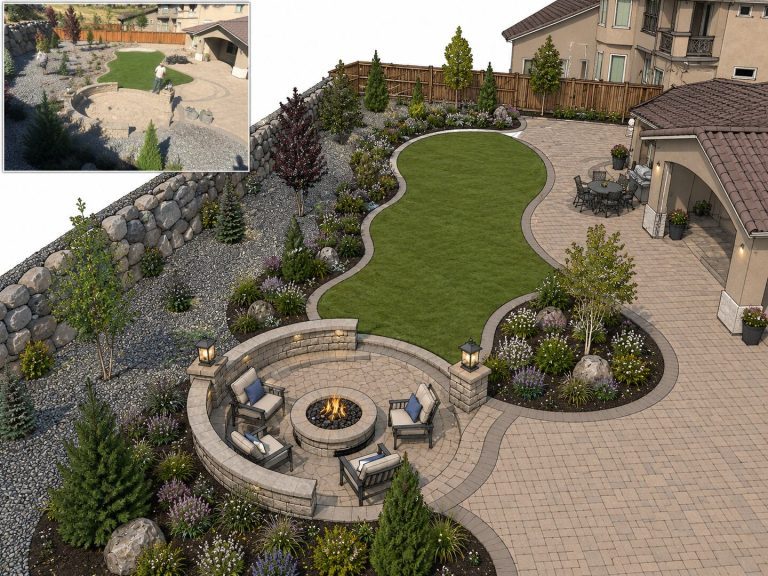
Our design and rendering service is meant for this kind of planning, where you see the layout before anything is built.
How does a 3D rendering show whether the layout will work before you build?
Flat plans are hard to read. A 3D rendering lets you see how a group of boulders sits against a retaining wall, whether five plants crowd a walkway, or how tall a planting will look from the patio. You can spot a grouping that feels off and move it on screen instead of after the plants are in.
At Rock Solid Landscape, Jeff Steckline, the owner, meets each client in person, walks the property, draws the design in 3D on his iPad, and writes the proposal himself. Seeing the yard laid out that way makes it easier to judge odd-number groupings, sight lines, and how the yard connects to the house.
A bare or dormant yard can make the bones of the property easy to see, but a rendering helps in any season. If you are in Reno, Sparks, Carson City, or elsewhere in our service area and want to talk through a design, you are welcome to reach out through our contact page.
Frequently asked questions
Is the 3-5-7 rule a strict rule or a guideline?
It is a guideline. Designers use it to avoid stiff, matching pairs and to create natural-looking groups, but site conditions, plant size, and function can override it. If a count of 4 solves a real problem, use 4.
Does the 3-5-7 rule apply to hardscape and lighting too?
It can, where you have a choice. Groups of three fixtures aimed at a tree or three planters at an entry look natural. Steps, walls, and lighting for safety still follow grade, building code, and function first, so do not force an odd count.
How many plant varieties should a front yard have?
Fewer than most people think. For many front yards, 3 to 7 plant types repeated in groups looks cohesive and is easier to water and maintain. A larger property can carry more, but repetition is what makes it look designed.
Can I use the 3-5-7 rule with a xeriscape yard?
Yes, and it suits low-water design well. Use groups of drought-tolerant plants with boulders and decomposed granite in odd numbers and repeat them across the yard. Plan irrigation for the groupings so each plant gets the water it needs while it establishes.
What other design rules of thumb do landscapers use?
Common ones include repeating plants and materials for unity, layering tall, medium, and low plants, and keeping hardscape lines simple. Designers also plan for the mature size of plants and for how the yard looks from inside the house. Like the 3-5-7 rule, these guide decisions but do not replace a site-specific plan.