
Cheapest Way to Landscape a Front Yard in Northern Nevada
A low-budget front yard in Northern Nevada usually works best when you do the unseen work first: grading, drainage and a reliable way to water. Then use drought-tolerant plants and rock mulch instead of sod, and phase hardscape later if needed. Skipping necessary prep can cost more down the road.
What is the cheapest way to landscape a front yard in the high desert?
Keep the footprint simple and put the money into the parts you can’t easily redo. In the high desert, that means a yard that sheds water away from the house, has a way to water plants efficiently, and uses materials that handle sun, wind, hard freezes and soil that is often alkaline and can drain fast (or, in some areas, hold water like clay).
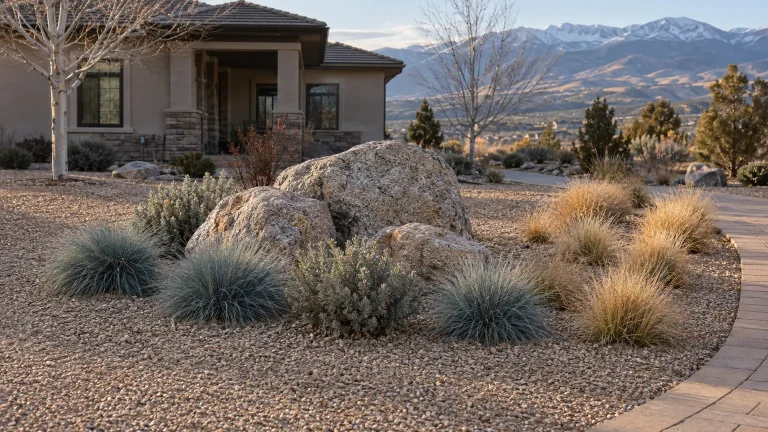
A typical budget-minded front yard here looks like this: a clear plan for beds and paths, a dependable watering setup for the plants, a modest number of tough shrubs, grasses and perennials, rock or mulch over the bare ground, and clean edging. Lawn is usually the first thing to drop, because it needs the most water and upkeep. Small plants cost less than large ones and fill in over a few seasons if you give them room.
The cheapest yard on installation day is not always the cheapest yard after a few years. A bed with no weed control, no edging and no plan for watering can need constant fixing.
Which parts of a front yard project drive cost the most?
Cost mostly follows three things: how much material goes in, how much ground has to be moved or prepared, and how much labor the finish work takes. Sloped lots, poor drainage, old irrigation and tight access all add labor before a single plant goes in.
Here is how common front yard choices compare on the points that matter for a tight budget:
- Rock mulch with drought-tolerant plants: lower upfront cost, low water use, light weeding. The main risk is weeds and plants spaced too tight or too sparse.
- Natural lawn (sod or seed): moderate upfront cost, high water use, regular mowing, watering and feeding. The main risk is dry patches and high water bills.
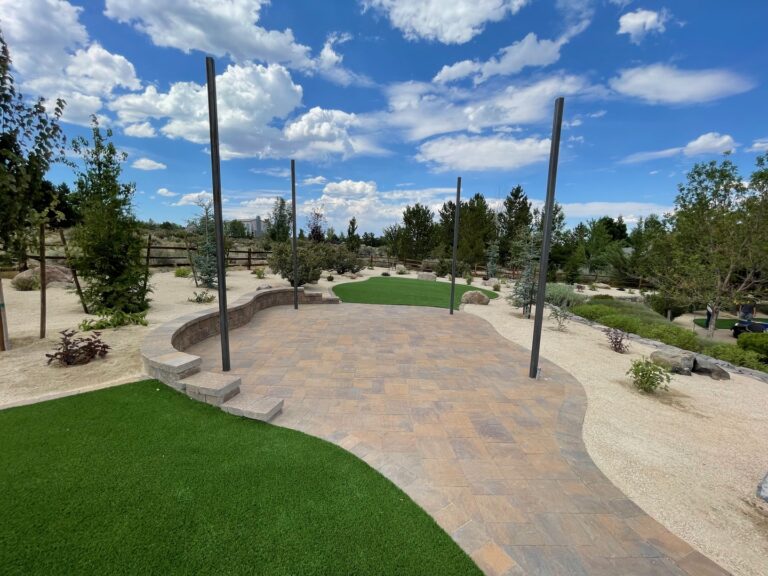
- Artificial turf: higher upfront cost, minimal water use (no irrigation needed, though it may be rinsed or cooled), occasional brushing. The main risk is poor base prep, heat and drainage problems.
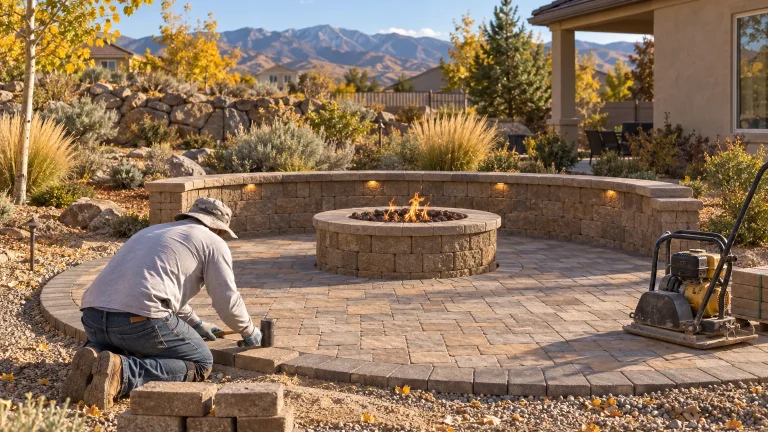
- Paver walkway: higher upfront cost, no water use, minimal upkeep. The main risk is settling if the base is thin.
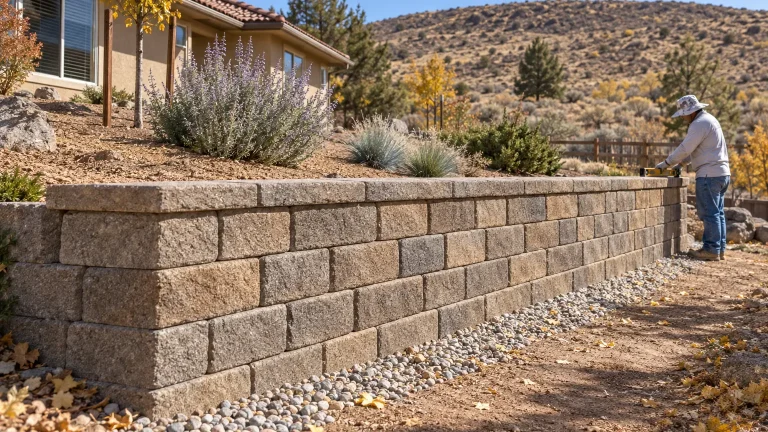
- Retaining walls and grade changes: higher upfront cost, no water use, minimal upkeep. The main risk is drainage failure and movement.
The takeaway: planted beds with rock mulch are often the lowest-cost way to cover a front yard, while hardscape, walls and turf are where budgets tend to climb fastest. If you want several of them eventually, phase them rather than shrinking each one.
Where can you save money, and where does cutting corners cost more later?
Smart places to save
- Plant size. One-gallon plants cost far less than larger ones and often establish well. Space them for their mature size and be patient.
- Fewer plant types. Repeating a handful of tough species looks cleaner and is easier to water than one of everything.
- Skip the lawn. Lawn is the most water-hungry part of a high desert yard. Replacing it with beds and mulch can lower water use and upkeep, though removing existing lawn is its own cost, so price that step too.
- Keep what works. Healthy mature trees, existing walkways in good shape, and sound irrigation mainlines can stay.
- Simple shapes. Gentle curves and straight runs generally cost less to install than intricate layouts with many small cuts.
Places where cheap can get expensive
- Drainage. Water pooling against a foundation or running across a walkway is a far bigger problem than a bare bed. Set grades before anything else.
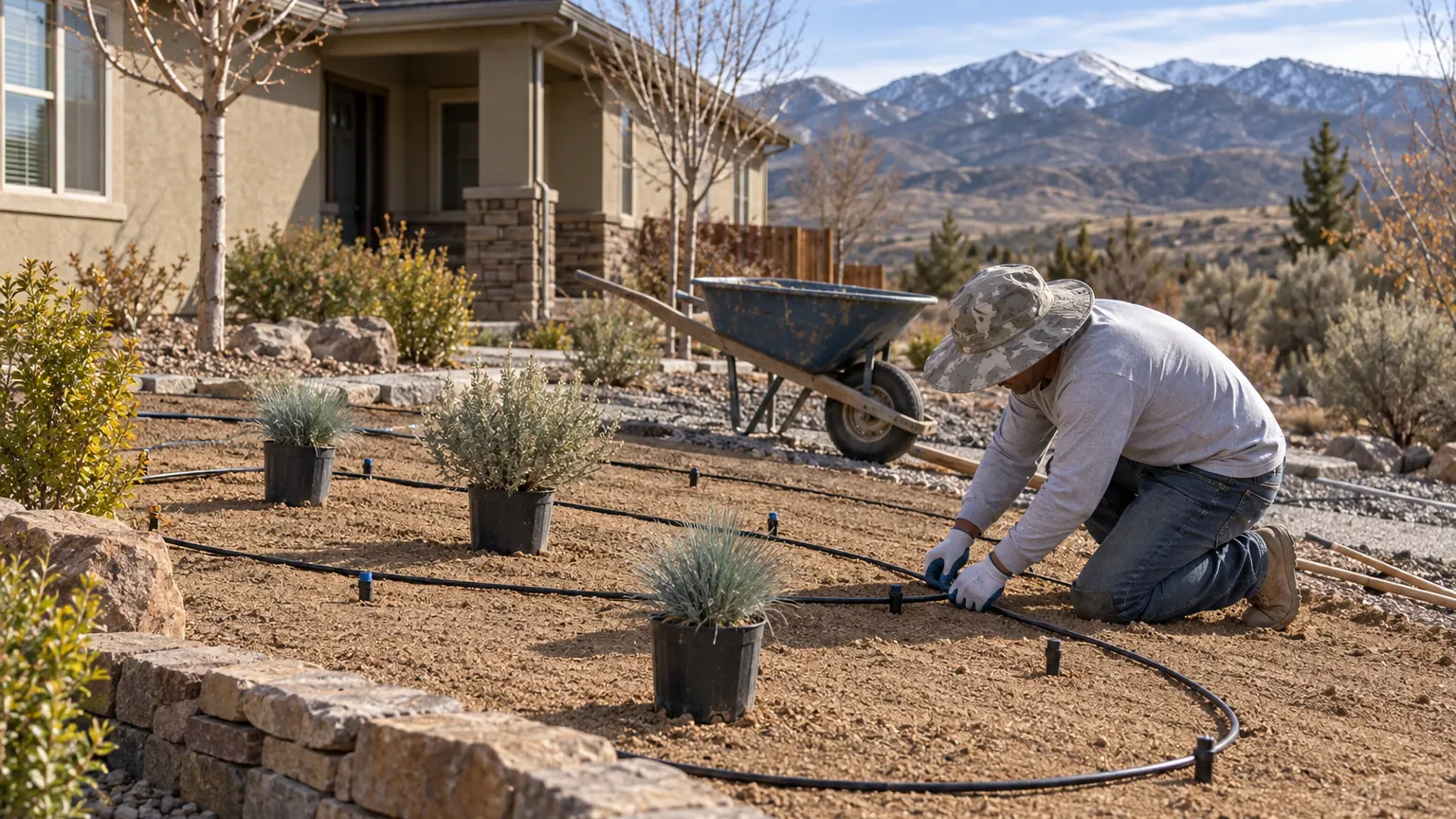
- Watering. New plants need steady water through a Nevada summer. Careful hand watering can work if you stick to it, but drip lines sized to each plant group make it easier and more reliable. Irrigation installation is part of what we build, and it is easier to put in before the plants and rock are down than after.
- Ground preparation. Rock laid over unprepared soil can sink, mix in and grow weeds. A little prep at the start saves a lot of weeding later.
- Edging. Without a solid border, rock migrates into lawn or onto walks and mulch ends up in the street.
- Base work under hardscape. If you add a paver walkway or steps, the compacted base is what helps keep it level through freeze and thaw. Thin bases can show up as settling.
- Planting at the wrong time. In the high desert, spring and fall are generally kinder to new plants than midsummer heat or a deep freeze. Planting off-season can mean replacing what died.
Is phasing a front yard over two seasons a smart way to manage cost?
It can be, as long as phase one is the foundation. Phasing spreads payments over time, but it does not always lower the total. Extra visits and temporary fixes between phases can add cost, so treat it as a budgeting tool. A common sequence is:
- Phase one: grading and drainage fixes, irrigation, main beds, edging, trees and larger shrubs, and rock or mulch.
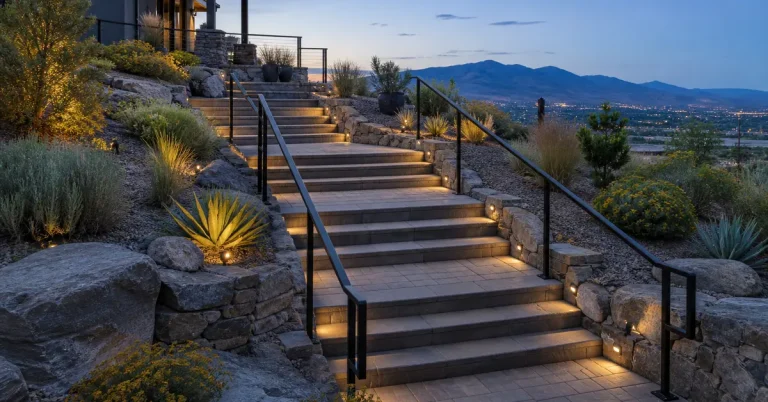
- Phase two: a paver walkway, outdoor steps, lighting, or a small retaining wall, once budget allows.
Phasing works best when the whole yard is planned at the start. If you don’t know a walkway is coming, you may plant where it needs to go or run irrigation lines through the path. Sleeves under future walks and wire runs for lighting cost little to add early and are a hassle to retrofit.
Phasing works poorly when each phase is designed separately. You end up redoing work because the pieces don’t fit together.
How do you compare quotes for a front yard project?
Quotes that look cheaper often leave things out. Ask each contractor to spell out the same items so you can compare them fairly:
- Grading, drainage and demolition of existing material
- Irrigation type, zones and whether it ties into your existing system
- Plant sizes, counts and species
- Ground preparation, weed control and edging
- Type and depth of rock or mulch
- Base depth and materials for any hardscape
- Cleanup and haul-away
- What is covered if something fails and for how long, in writing
If one quote is much lower than the rest, check which line items are missing. A written scope tells you more than the total.
When does it make sense to start with a design plan?
Almost always, even for a modest yard. A plan shows where water goes, where plants will be in five years, and what can wait. It also gives you something concrete to price and phase.
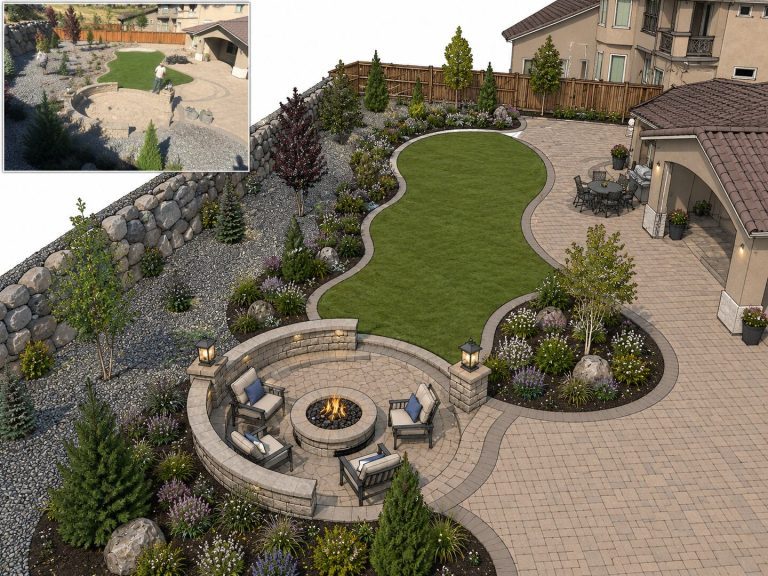
When our owner, Jeff, meets a homeowner, he walks the property, draws the design in 3D on his iPad, and writes the proposal himself. Seeing the yard rendered first can make it easier to decide what to build now and what to hold for later. You can read more about how we approach this on our landscape design and build page.
One more check before you commit: if you live in an HOA, get approval before ordering anything. Many associations have rules on front yard materials, plant lists and turf. City and county rules, and water provider requirements, also vary across the area, so check with your local agencies before you finalize a plan.
If you want help sorting out what to do first on a tight budget, you can reach out through our contact page.
Frequently asked questions
Is xeriscaping cheaper than a lawn in Nevada?
Usually yes over time, because it needs far less water and mowing. Upfront cost depends on the plants, rock and irrigation you choose, and a poorly prepped xeriscape can still need a lot of fixing. Check any local turf or water-efficiency rules before you plan.
Can I landscape my front yard in phases?
Yes, and it is a good way to spread out payments, though it may not lower the total cost. Do grading, drainage, irrigation and the main beds first, then add walkways, steps or lighting later. Plan the whole yard up front so later phases fit without tearing out earlier work.
Does front yard landscaping add curb appeal value?
A tidy, well-planned front yard improves how a home looks from the street, and buyers notice it. How much it adds to sale price depends on your market and the home, so no one can promise a specific return. A local real estate agent can give you a better read.
What is the cheapest ground cover for a dry climate?
Rock or mulch over prepared soil with weed control is usually the lowest-cost cover. Low-water groundcover plants can be affordable too, but they need reliable watering while they establish, whether by drip lines or careful hand watering. The right choice depends on sun, slope and soil.
Do HOAs in Reno restrict front yard landscaping?
Many HOAs have rules on plants, rock, turf and hardscape, but they vary by association. Check your CC&Rs or contact the board and get written approval before you buy materials or start work.